This is the eighth part in a series on how AI is crossing out of software and into the physical world. This time, Jan Bosch looks at AI-driven discovery.
Of everything in this series, the laboratory is where I would most like the optimistic story to be true. And it partly is. The best single piece of evidence I know comes from drug development, and it’s genuinely striking.
A 2024 analysis in Drug Discovery Today by Jayatunga and colleagues looked at molecules discovered by AI-native biotech companies that had reached the clinic. Of 24 that completed Phase I, 21 succeeded – a rate of 80-90 percent, against a historical industry average somewhere between 40 and 65 percent. For an industry whose defining characteristic is failure, that’s an enormous result.
Then look at Phase II. Of the ten molecules that had completed it, the success rate was around 40 percent. Which is to say, indistinguishable from the historical norm of 30-40 percent. I haven’t been able to stop pondering that pair of numbers, because I think they tell you precisely what AI has and hasn’t done to science.
Phase I asks engineering questions: Did we make the molecule we intended? Does it behave in a body the way the design said it would? Is it tolerated? These are questions about whether your model of the molecule was right, and AI turns out to be very good at it.
Phase II asks a scientific question: Is this target actually implicated in this disease in a way that matters? That’s a question about whether your model of the biology was right. The evidence so far suggests that AI hasn’t helped with it at all.
The authors are careful, and so should we be: Ten molecules aren’t a dataset, the analysis covers only AI-native firms and excludes work done inside large pharma, and these numbers will move. But the shape of the finding is consistent with what I see elsewhere, and it generalizes well beyond medicine. AI has compressed the design step. It hasn’t touched the step where you find out whether the underlying idea was correct.
Materials science makes the same point at a much larger scale and with less ambiguity. When Deepmind announced that its GNome system had predicted 2.2 million new crystal structures, it was received as one of the great results of AI-for-science. Then Anthony Cheetham and Ram Seshadri of UC Santa Barbara went through them and published their assessment in Chemistry of Materials. They reported finding “scant evidence for compounds that fulfill the trifecta of novelty, credibility and utility,” and made a distinction I think is worth carrying around: These were chemical compounds rather than materials, “because they have no demonstrated functionality or utility at this point.” Cheetham’s verdict on the practical value was blunter: not particularly useful to experimentalists.
You can argue about how harsh that is. What you can’t argue with is the ratio. Two million predictions, a few hundred syntheses a year in a good lab – even if the hit rate were excellent, the queue to evaluate each prediction stretches past the end of everyone’s career.
Which is the shape I promised at the top, and it’s the same one as in the previous part of this series. In energy, the digital part of the system outran the wires and the constraint moved from generating power to connecting it. In science, the digital part has outrun the bench and the constraint has moved from having ideas to testing them. Generation became nearly free. Verification didn’t, because verification is physical: It needs reagents, furnaces, cell lines, time and a person who notices that something has gone wrong.
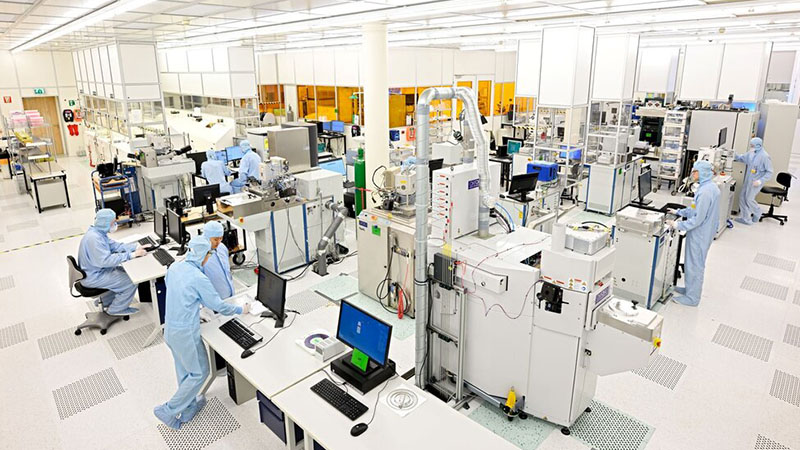
The self-driving lab is the serious attempt to widen that bottleneck. The deployments are real. Ginkgo’s cloud lab runs more than seventy instruments with reconfigurable automation carts. Alán Aspuru-Guzik’s Acceleration Consortium in Toronto is building toward a fleet of fifty autonomous robots on a 200-million-Canadian-dollar program. A Ginkgo collaboration with OpenAI cut the cost of cell-free protein synthesis by about 40 percent, from roughly 698 to 422 dollars per gram. Bayesian optimization on automated reactors can explore a chemical space ten to a hundred times faster than a person with a pipette.
But on a five-level autonomy scale borrowed, fittingly, from vehicles, most systems sit at level two or three: closed-loop optimization on narrow, well-posed tasks. Level five doesn’t exist. And the reported bottleneck isn’t robotics; it’s middleware. Instruments don’t expose programmatic interfaces, drivers are bespoke Python wrappers, standards adoption is slow and orchestration across multi-vendor equipment barely works. In regulated environments, a human approval gate is mandatory and can’t be automated away. If that sounds familiar, it should. It’s the argument of this series’ part five in a lab coat: The intelligence isn’t the hard part; the integration with physical equipment nobody designed to be integrated is the hard part.
For a startup, this points somewhere unfashionable but defensible. The scarce asset in AI-for-science isn’t a model that proposes candidates. Proposals are abundant and getting cheaper. The scarce asset is validated experimental throughput: a closed loop you own, in a domain narrow enough that the loop actually closes, generating data that exists nowhere else because you paid to create it. That’s a slower business to build than a model company but also much harder to copy.
The second opportunity is the bottleneck itself. Instrument APIs, orchestration layers, digital twins of laboratory equipment, standards plumbing: deeply unglamorous, and the reported constraint on the entire field. Anyone who makes a multi-vendor lab programmable is selling to every closed loop that gets built, whoever wins the science.
The trap is to sell generation into a world that can’t consume it. A tool that produces ten thousand candidate molecules for a customer who can test forty a month hasn’t accelerated anything. It has moved the queue.
Pharmaceutical and chemical incumbents are in a stranger position than they realize: Their most valuable asset is the one they’ve never valued. Every large research organization is sitting on decades of experiments that didn’t work. Compounds that failed, syntheses that wouldn’t run, formulations that degraded, assays that came back negative. None of it was published, because the literature has no appetite for negative results, and most of it exists only in lab notebooks and internal reports. For a model trying to learn where the boundaries of a chemical space actually are, that’s the most informative data in existence. It’s the one corpus that no competitor and no foundation model have, because it was never public.
There’s also a correction to be made to the strategy decks. The pitch inside big pharma has been that AI will fix the pipeline. But the pipeline has never mostly failed at the design stage; it fails in Phase II, on biology. The evidence so far says AI raises Phase I success and leaves Phase II where it was. Buying AI to solve a Phase II problem is a category error, and an expensive one. The honest version is that AI makes the cheap part of the funnel cheaper and faster, which is worth having, and does nothing yet about the part that consumes the money.
For society, the promise here is the largest in the series. Compressing discovery cycles in medicine, materials and energy isn’t a productivity story; it’s a story about how quickly human problems get solved, and I don’t want to be glib about how much good that could do. But there’s a risk in the same mechanism, and it’s epistemic rather than economic. If we can generate plausible claims far faster than we can verify them, the scientific record fills up with things that look like knowledge and haven’t been tested. Two million predicted structures enter the literature as a result. Each is individually reasonable, collectively unverified and (this is the part that worries me) perfectly usable as training data for the next model. We’ve built a machine that can produce the form of a finding without the substance of one, at a rate no review process was designed to absorb.
And there’s a concentration question underneath it. The organizations that can run genuine closed loops are those that can afford both the models and the robots. If validated experimental throughput becomes the scarce asset, then the ability to find out whether something is true becomes unevenly distributed in a way that the ability to speculate about it isn’t.
Which is why I want to end with the most useful paragraph ever written about scientific self-deception, from a commencement address at Caltech in 1974 that has aged better than almost anything else in the discipline. Richard Feynman, in the talk published as Cargo Cult Science: “The first principle is that you mustn’t fool yourself; and you’re the easiest person to fool.”
So, here’s the question I’d put to anyone funding or running an AI-for-science program. You’ve made proposing things a thousand times cheaper. By how much have you made the experiments cheaper? If the answer is “we haven’t got to that yet,” you haven’t accelerated discovery; you’ve industrialized the part of science that was never the hard part.