Plumerai has announced a partnership with America’s Chamberlain Group, the largest manufacturer of automated access solutions. Based in London and Amsterdam, the Anglo-Dutch startup is a pioneer in efficiently embedding powerful AI capabilities into smart home devices. With Chamberlain’s products found in 50+ million homes, the partnership marks a significant milestone in the adoption of Plumerai’s Tiny AI technology. The startup is backed by iPod inventor and Nest founder Tony Fadell and Arm founder Hermann Hauser.
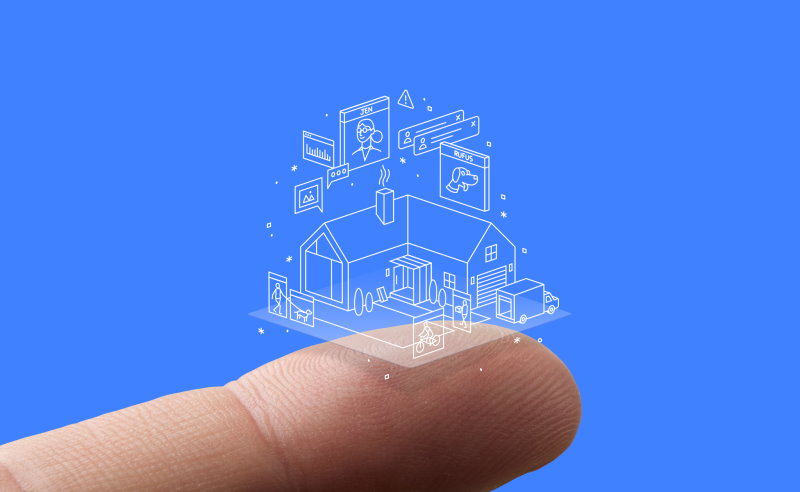
To achieve features like people detection and familiar face identification, cloud-based AI and, in particular, large language models (LLMs) require vast remote data centers, consume increasing amounts of energy, pose privacy risks and incur rising costs. Tiny AI can do all this on the device itself. According to Plumerai, its technology is cost-effective, chip-agnostic, capable of operating on battery-powered devices, doesn’t clog up the bandwidth with huge video uploads, has minuscule energy requirements and offers end-to-end encryption. The startup claims to have built the most accurate and compute-efficient on-device AI solution, trained with over 30 million images and videos and consistently outperforming competitors in every commercial shootout.
Tiny AI features person, pet, vehicle and package detection notifications in 0.7 seconds, compared to 2-10 seconds for the average smart cam, and advanced motion detection in 0.5 seconds. Plumerai’s familiar face identification and stranger detection deliver accurate notifications while protecting privacy. In an internal test, leading smart cam AI incorrectly identified strangers as household members in 2 percent of the recorded events, while Tiny AI made no incorrect identifications. Unlike other battery-powered smart cams that send their video feed to the cloud over power-hungry Wi-Fi, Plumerai enables the use of low-power mesh networks to send notifications. Companies such as Chamberlain can also easily change their chips without losing AI features.