Dutch corporate tech culture can be a difficult hurdle for foreigners to overcome. That’s why software developer ICT Strypes asked High Tech Institute to host an in-company corporate culture course for their Portuguese engineers.
When software developer José Rodrigues started working with his Dutch client, it was a culture shock for him. He had previous experience in the Netherlands: as an exchange student, he’d studied for a year in Groningen. Yet, the high-tech work culture was hard for him to get used to. “It’s a bit like organized chaos. You need to learn how to trust the process.”
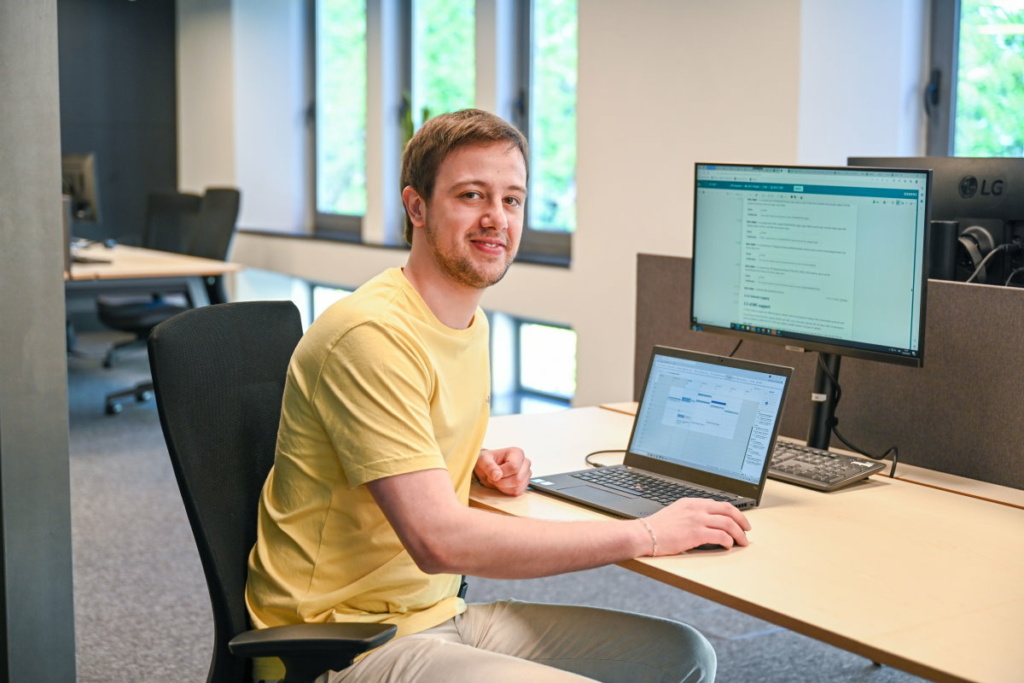
Rodrigues started his career as a physicist, graduating from the University of Coimbra in Portugal. He quickly moved into software engineering, where he ended up at ICT Strypes. “I’m currently working on the drivers for a water cabinet that’s responsible for cooling,” he says. “My job is writing software and testing it.”
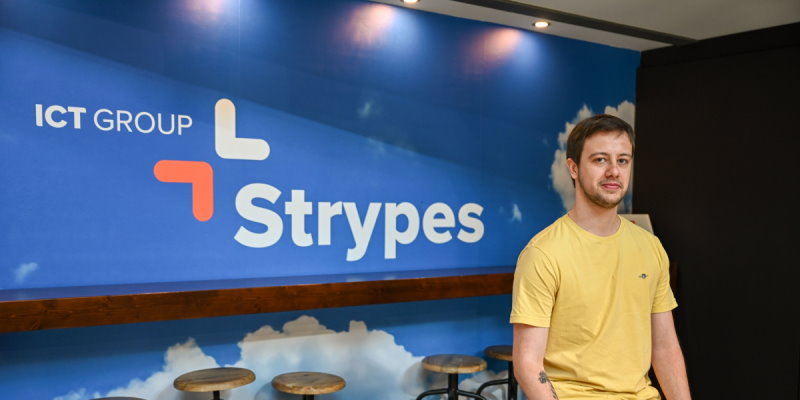
ICT Strypes Portugal is a software development company with roots in the Netherlands. Today, it’s based in the South European country, with facilities in Lisbon and Porto. The company has experienced that Dutch and Portuguese work cultures can be quite different. That’s why it decided to host a one-day culture training in Porto, “How to be successful in the Dutch high-tech work culture” by High Tech Institute.
Rodrigues was one of the participants. “There were two reasons to take it,” he says. “One was to better communicate with our Dutch contacts. The other was to learn from the Dutch high-tech ecosystem and see which of their lessons we can also apply here in Portugal.”
Natural selection
The training zoomed in on a specific semicon equipment company and their unique way of doing things. “Even inside the Netherlands, they have a very atypical culture,” notes Rodrigues. “My first impression was: this is chaos. It was organized chaos, but still chaos. When I first had to work with them, it felt quite confusing. But after a while, you realize that it’s efficient in its own way and that they get the job done.”
“The Dutch are in general very punctual and direct,” Rodrigues continues. “Our customer, on the other hand, is more chaotic than the average Dutch company. It’s a type of natural selection. They overcame a lot of challenges and converged on this way of working. And it really works.”
The course was taught by Jaco Friedrich, one of High Tech Institute’s trainers, who has decades of experience in the Dutch corporate tech culture. He came to Porto to teach the course to the ICT Strypes engineers.
“It was much more engaging than I initially expected,” Rodrigues recalls. “Often, these kinds of courses tend to get a bit dense, particularly by the end. There’s a trainer with a Powerpoint spewing facts all day long. This one wasn’t anything like that. There were a lot of practical examples. We also engaged with the trainer, and with each other. For example, we did simulations of real-life social situations.”
Giving feedback
Because of the course, Rodrigues and his colleagues learned how to accomplish certain tasks more efficiently. One of the most important of those was the code review. In the past, there was some friction here between the Netherlands and Portugal. After the course, however, the process was reviewed and improved.
The course also improved the professional skills of the participants and provided solutions to common workplace problems. “One of the things I learned myself was how to push an idea forward,” observes Rodrigues. “Engineers sometimes tend to be very perfectionist. We want our product to be 100 percent perfect. This, however, sometimes delays a project and causes it to stall. For the client, a 90 percent perfect product that can be delivered earlier is at times better than a 100 percent perfect one that’s delivered too late. Making that switch in mindset was an important outcome of the course.”
Giving feedback, often a touchy subject for engineers, has equally improved since the course. “Sometimes, it was hard giving feedback without appearing judgmental,” Rodrigues notes. “Technical people tend to be sensitive about the quality of their work. The course taught us how to successfully communicate feedback without hurting or making the other person angry. That’s something I now use very regularly.”
Criticism is one of the areas in which Dutch and Portuguese people differ heavily. Dutch professionals tend to be much more direct than their Portuguese counterparts. “If you’re too direct with them, the average Portuguese person will get offended,” Rodrigues says. “That doesn’t happen very often with a Dutch person. That, of course, doesn’t mean that Dutch people have bad intentions; it’s just part of their culture. A Portuguese professional, however, will take that level of directness quite hard. That’s another thing the course discussed and taught us to handle better.”
For Rodrigues, this training is a must-have for non-Dutch people working with high-tech companies in the Netherlands. “My first impression was overwhelming”, he admits. “Over time, I learned to see that it actually made sense and that their organization actually works very well. But if you’re not used to this, it can be a bit of a culture shock. If I’d taken this course earlier in my career, I would have understood my Dutch colleagues from day one.”
This article was written in close collaboration with High Tech Institute. Top image credit: Nuno Vasco/NVStudio