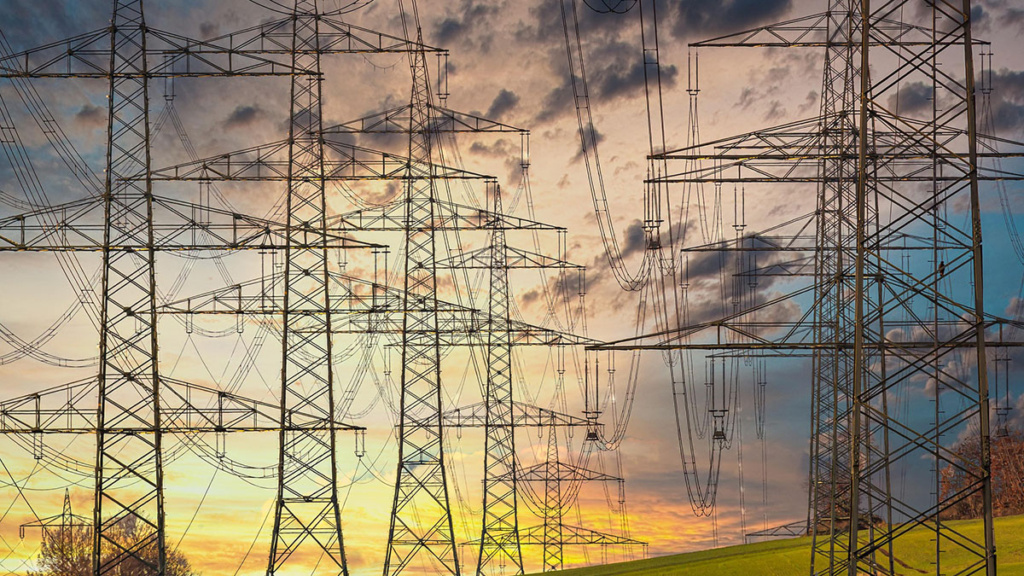
Today’s brute-force approach to AI is no more scalable than DC electricity was compared with AC technology, argues Malcolm Penn.
At circa 150 percent year-on-year growth in September, this semiconductor cycle peak has set a new chip industry record, more than twice the industry’s two previous record booms in June 2000 (59.3 percent) and January 2010 (66.6 percent) and four times higher than the more typical 30-40 percent levels. What differentiates this cycle from all previous ones is that ICs were the sole driver, up 169.6 percent versus September 2025, while discretes and opto rose just 6.7 percent and 4.6 percent, respectively.
IC ASPs are currently 27.7 percent higher than December 1995’s 3.23 dollar previous record high during the Windows DRAM shortage, with memory again the driving factor behind the current surge. Total semiconductor ASP inflation is now running at 330 percent, with year-to-date ASPs hitting 1.39 dollar in September 2026.
This may not yet be of concern to the gung-ho memory firms, Nvidia, TSMC or the Mag7 hyperscaler fraternity, at least as long as they can keep their “trust me” AI funding juggernaut rolling, but the real world is different. Were it to continue unchecked, ASP inflation would call time on the Moore’s Law-driven deflation boom that broadened the availability of affordable electronics into the everyday lives of ordinary people. Thankfully, it won’t, and ASPs will inevitably self-correct, either when new capacity comes onstream or market demand collapses due to ASP unaffordability or an AI data center slowdown/crash.
With AI infrastructure deployment the single biggest market driver, the outlook is starting to look somewhat shaky. Investor confidence in the AI boom is starting to show signs of strain, driven by steadily increasing concerns about whether future revenues will justify the enormous investment in supporting infrastructure.
Huang 2.0
Jensen Huang’s spectacular demise couldn’t have come at a worse time for the growing divide between investor optimism about AI’s long-term potential and concern over the timing and scale of returns. While AI remains widely viewed as a significant driver of future growth, markets are becoming less willing to support increasingly expensive investment programs without clearer evidence of profitability.
Were it merely a juicy revelation of potential sexual misconduct linked to espionage, Huang could probably have ridden out the scandal, albeit with his squeaky-clean, self-anointed industry rock star persona badly dented. A victim of his exaggerated self-belief, arrogance, corporate hubris and pugilistic nature, what made the revelations and his subsequent downfall all the more potent was their broader implications for his personal integrity. The associated breach of trust raised wider questions about his judgement, the adequacy of market disclosure and Nvidia’s susceptibility to undue external influence.
Clearly, the affair was a damaging blow to the Nvidia chief, who in recent years has become the iconic face of the AI boom, but it also heralds the loss of the loudest AI technology champion. Nvidia was much more than an AI chip designer; it was also something of a central bank for the AI industry, providing massive funds to leading AI startups and cloud computing companies that, in turn, purchase its chips. This has made the firm a crucial source of capital and confidence for the broader AI ecosystem. The sudden loss of Huang, effectively the governor of this AI central bank, could fuel fresh questions about the sustainability of the AI-driven stock market boom.
Aside from concerns that current growth is driven by ASP inflation, a micro-focus on AI data center (hyperscaler) infrastructure spending and not transformational, affordable end market products, the boom also dismisses the prohibitive cost of expensive AI-related chips in all other non-AI hyperscaler applications and the unsustainability of the current data center incarnations and their resource-intensive, brute-force foundation and impoverished revenue generation approach. We fail to see how the current wave of energy-intensive GPUs, with data centers measured in gigawatts, is the correct sustainable long-term approach. We believe the current AI rollout has a remarkably close parallel with the late nineteenth-century electricity generation deployment.
While Edison’s direct current (DC) solution was the initial easy option, it scaled badly and quickly proved unsustainable, paving the way for Tesla and Westinghouse’s three-phase alternating current (AC) alternative. Our view is that today’s brute force AI GPUs and data centers are stuck in Edison’s DC power station moment. They scale badly and consume unsustainable levels of resources. What AI desperately needs is its GPU/data center Tesla/Westinghouse moment. Maybe now, freed from his Nvidia ties and hubris, this might be forthcoming from Jensen Huang 2.0?
Different this time
Whichever way we cut the mustard, our analysis always leads us back to the same logical conclusion: The euphoria surrounding the current ASP inflation-driven chip market growth is fundamentally unsound and delusional, misinterpreting high chip revenue growth as a sign of strong market demand, rather than what it really is, namely higher chip prices. All previous cycles were unit-driven and more broadly based.
We stand firmly behind our conviction that the current market boom isn’t a demand-driven supercycle but an ASP inflation bubble. Moore’s second law projected the long-term average IC value was a dollar, with long-term ASP growth zero. History has shown this prediction has merit. Whilst we have no doubts about the longer-term transformational potential of AI and the associated end-market chip demand it will eventually generate, we believe the current emphasis on Nvidia-based GPUs and HBM infrastructure, coupled with mathematically extrapolating ASP-driven growth rates, is both misleading and highly dangerous.
Right now, the market is on a high. Only time will tell whether our cautionary view is warranted and if it turns out we were wrong, we’ll be the first to hold our hands up. In the meantime, we stand by our January 2026 market downturn warning, either in Q4 2026 (if the AI data center boom slows) or Q1 2027 (once additional memory supply comes online). The correction, when it comes, will be painfully harsh. Unless, of course, “it’s different this time.”
This commentary by Future Horizons was lightly edited by Bits&Chips for brevity.