

Noak, a spin-off from Imec and Hasselt University, has raised 5 million euros to bring perovskite–silicon tandem solar cells closer to industrial production. The Helios Foundation, Nuhma and V2HFin provided the seed funding. Noak will use Energyville’s facilities in Genk to advance development and prepare for gigawatt-scale production with manufacturing partners.
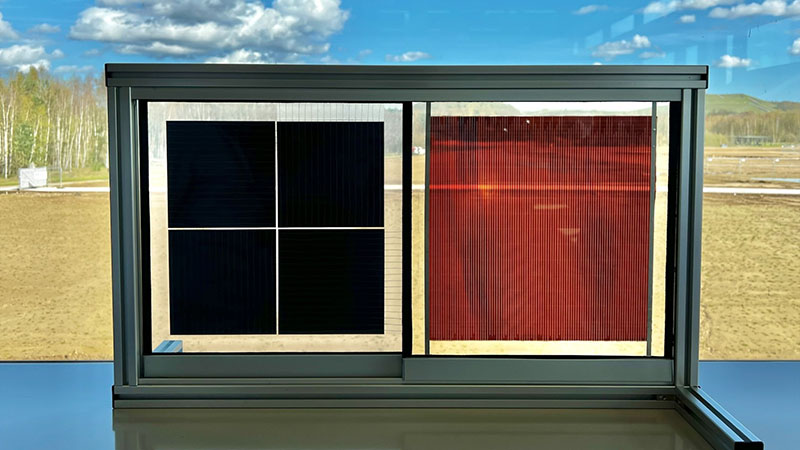
Tandem cells pair a perovskite layer with silicon and are designed to capture a bigger part of the solar spectrum. According to Noak, this approach offers conversion efficiencies of 30-35 percent, above the practical limit of around 27 percent for conventional silicon cells. To test long-term stability, Imec and Hasselt University have already collected five years of outdoor operating data from more than ten test sites across three continents. The next step is to demonstrate stability and performance at scale.
Noak’s design uses a woven foil to make electrical connections at the rear of the cell. Removing metal contacts from the front reduces shading. The company says the foil and a design that divides the tandem into smaller interconnected cells can also decrease metal use and make modules easier to disassemble for recycling.
