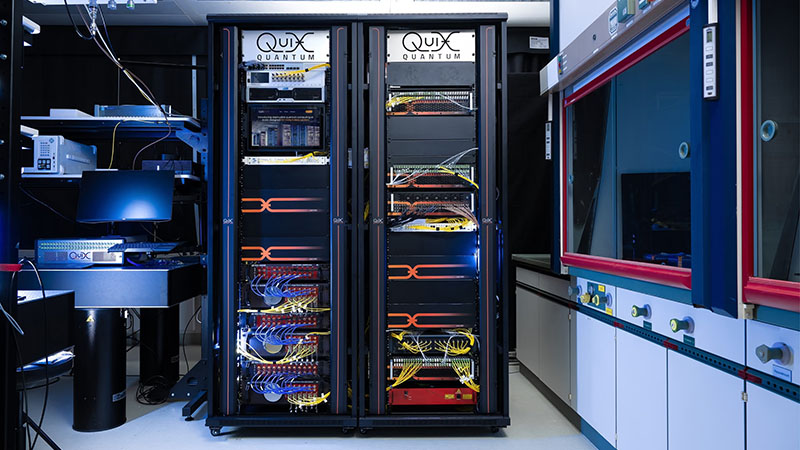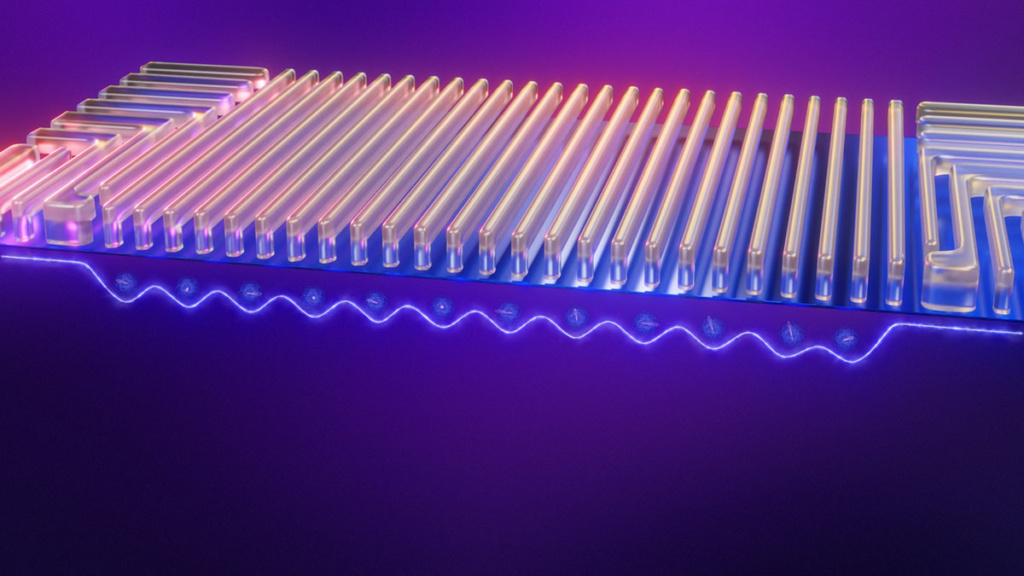
Researchers using Quix Quantum’s technology have successfully demonstrated the on-chip generation of so-called Greenberger-Horne-Zeilinger (GHZ) states, a critical component for the advancement of photonic quantum computing. The Dutch startup focusing on photonics-based quantum computing hails the result as a breakthrough that validates the company’s roadmap towards building a scalable universal quantum computer.
The creation of GHZ states is necessary for photonic quantum computers. In a matter-based quantum computer, qubits are stationary, typically positioned on a specialized chip. By contrast, a photonic quantum computer uses flying qubits of light to process and transmit information. This information is constantly passed from one state to another through a process called quantum teleportation. The GHZ states – entanglements across three photonic qubits – are the crucial resource enabling the computer to maintain this information.