At high-tech companies, valuable expertise often remains locked in engineers’ minds, making it challenging for new colleagues to grasp the complete picture. This knowledge gap was exactly what mechatronics engineer Eric Dannenberg encountered at Itec with feedforward control systems, which prompted him to take High Tech Institute’s “Advanced feedforward and learning control” course.
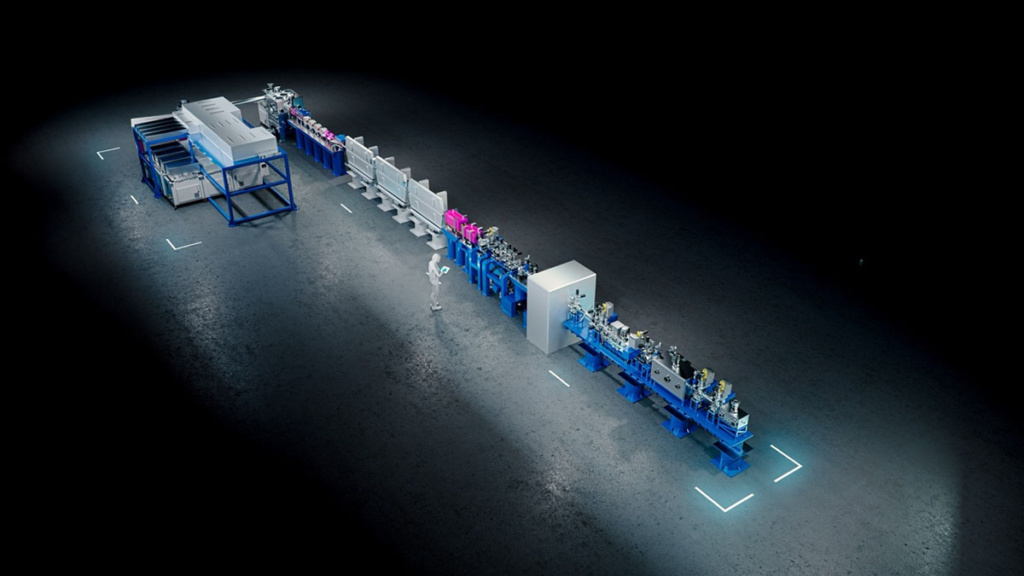
Nijmegen-based Itec operates at the forefront of scientific discovery, merging its die-bonding technology with machines taking care of subsequent steps in the chip production process. The company develops high-throughput assembly and test equipment for semiconductors, specializing in optical and electrical inspection and die bonders. One such machine focuses on taking chips from the wafer and gluing them in place on the substrate.
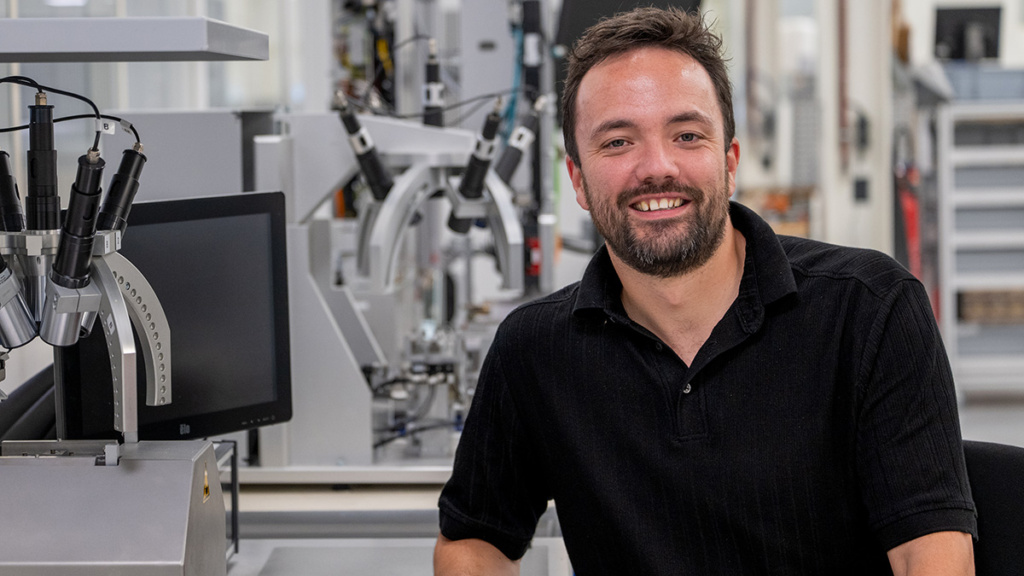
Eric Dannenberg has been with Itec for three years now, the last of which he spent as a mechatronics engineer. Earlier, he worked as a mechanical engineer, amongst other engineering roles, but his interest in mechatronics never wavered. “A mechanical engineer designs the needle that pushes the chip to the right position,” he explains. “The mechatronics engineer is responsible for the needle’s movements, ensuring the right speed and coordination.” Mechatronics, however, is a niche in the mechanical and electrical engineering branch, meaning fewer jobs are available.
As a mechatronics engineer at Itec’s die bonder department, Dannenberg focuses on three main areas. First is the general problem-solving and debugging of existing equipment, helping customers keep their machines operational. Second, he optimizes the current high-end systems, looking for ways to increase throughput speed and precision and decrease errors. Lastly, he and his colleagues work on designing the next generation of machines, using the most recent developments, acting truly at the forefront of their scientific field.
Dannenberg appreciates the alternation in responsibilities. “Only doing repair work might get boring, but getting back to the roots is very helpful, and the small successes are welcome when stuck on an engineering problem for future machines.”

Feedforward control
When Dannenberg started working for Itec, he had a lot to learn. “I applied for the course at High Tech Institute because I noticed that while my colleagues had a wealth of knowledge, their explanations were always -logically – aimed at the matter at hand. I often felt like I was missing context, not getting the full picture.” Itec has a history of using courses from High Tech Institute, some of which Dannenberg had already completed. “Advanced feedforward and learning control was the next logical step, after motion control tuning and advanced motion control.”
Feedforward control refers to the machine preparing control inputs in advance, based on the desired path. Instead of waiting for position errors to occur, the actuators are guided to proactively follow the upcoming reference points more accurately. This reduces errors and improves response time, since adjustments happen while the substrate is moving forward.
The course, which took three consecutive days, focuses on iterative learning control, repetitive control and new advanced feedforward algorithms. It thus serves a very niche market segment, where little training is available. For Itec, iterative learning control with basic functions is the form most used from the course, but the entire training paints a complete picture.

Firsthand experience
The course gives insights into developing machines capable of reducing position errors to encoder resolution during repetitive movement. It provides a roadmap of how to get to the point where the encoder resolution, rather than high-value parts, becomes the limiting factor in position error reduction. Here, the close collaboration with Eindhoven University of Technology comes into its own, according to Dannenberg. “The knowledge that High Tech Institute shares in its courses is truly novel. It doesn’t exist in books yet and can only sparsely be found on the internet.”
This knowledge comes in handy both when optimizing existing equipment and when designing new systems. “Knowing the extent of the latest research allows us to make smart decisions on whether to design entirely different mechanical parts for a new machine or adapt what we already have to fit the latest developments in the field.”
Dannenberg gained more than just an overview of the complex material with this course. “We could actually test the knowledge and the algorithms we were learning on real machines. Playing around with these algorithms straight away helped us gain an understanding to a level you can’t achieve just from a Powerpoint presentation. We also got to experience firsthand how the algorithms learned from their interaction with the machine. In one case, for example, we could see the algorithm adapting to the resistance of attached cables, which it hadn’t taken into account before.”
That hands-on knowledge made it easier to put the learnings into practice. When returning to the work floor, Dannenberg could immediately share his ideas and experiences with his colleagues. Having a clearer, bigger picture helped him advance his tasks.
Dannenberg already knows what his next course will be: “Experimental techniques in mechatronics.” This training focuses on determining the dynamic properties of mechatronic systems. “A colleague who followed this course was quite enthusiastic and my manager agreed that it would be a good next step for me.”
This article was written in close collaboration with High Tech Institute.