The first Dutch test mast for future 6G traffic on the 600 MHz band has been put into operation on the campus of Delft University of Technology. The installation uses 5G-Advanced technology and is intended to determine how the low frequency can contribute to a nationwide, interference-resistant 6G network. The first application is the real-time control of the power grid.
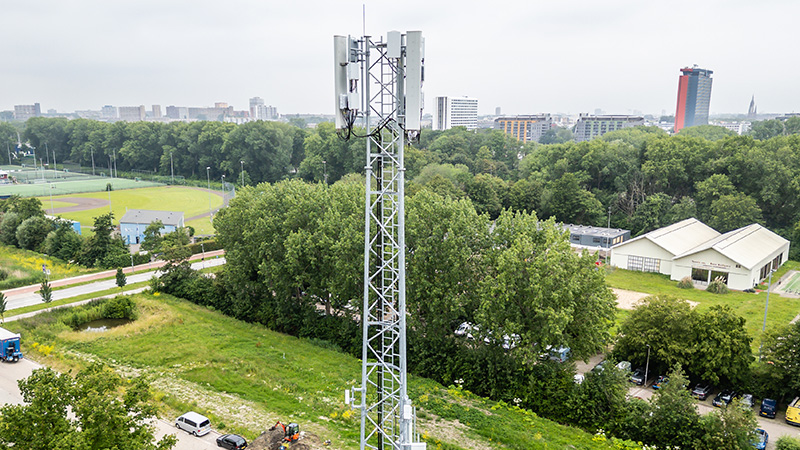
The 600 MHz band has a greater range than the higher frequencies currently used for mobile communication. The radio waves lose less strength as they travel, so they reach users more easily behind buildings and other obstacles.
The Delft mast is part of the National 6G Testbed, deployed in five locations by the TNO-led Future Network Services (FNS) consortium. It gives Dutch companies and knowledge institutions early access to the technology, which, according to the consortium, strengthens the Netherlands’ digital autonomy and its position in Europe.
Within the FNS program, organizations including TNO, TU Delft and Nokia are collaborating on a smarter energy grid. This optimization helps prevent congestion caused by overloads and improve resilience. The new technology enables local data exchange for up to 72 hours, even in the event of a power outage or network failure, enabling reliable information supply to citizens in emergencies and critical IoT healthcare applications.