
Skip to content
Bits&Chips
×
×
Memberships
Advertising
Magazines
Videos
Contact

Log in

Editorial

ASML’s maskless scanner is a matter of time

30 June 2025
Reading time: 4 minutes

Will ASML take its maskless technology off the shelf and bring it to market in the coming years? René Raaijmakers thinks so, although that’s purely a gut feeling.

Shortly after 2000, ASML conducted extensive research into the viability of maskless lithography. With good reason. At that time, lithography for chips seemed to be running into a wall. Machines with calcium fluoride optics and 157nm laser sources were tough (and were scrapped in 2003), immersion was just emerging and EUV was still highly uncertain.

It’s hardly imaginable anymore, but a quarter century ago, there were fierce discussions about the technological-strategic direction in Veldhoven. Besides 157 nm, immersion and EUV, it also seemed like a good idea to investigate whether it would be economically attractive to project chip patterns (or parts thereof) pixel by pixel. After all, mask costs were rising exponentially and the number of interconnect layers was increasing.
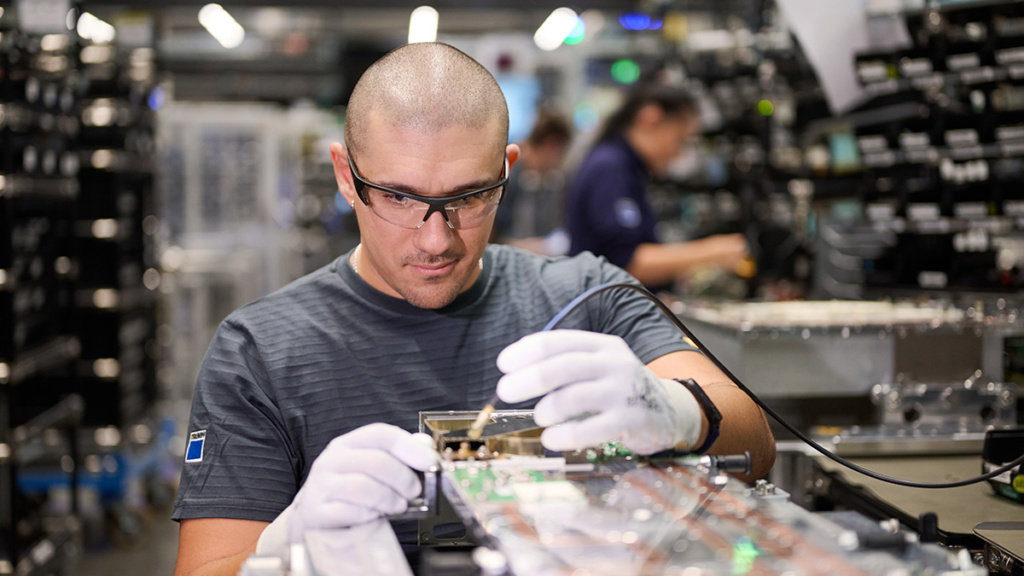
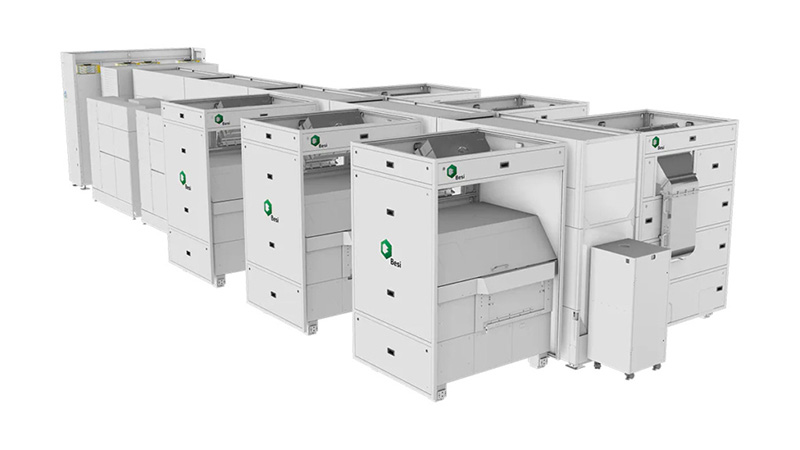
By going maskless, chip manufacturers could also tap into interesting markets. Small series of ASICs would become viable. The technology might convince many FPGA customers to start printing cheap, faster, energy-efficient chips for clients.

So, ASML sought collaboration with Swedish Micronic, which would develop arrays of micromirrors for a maskless machine. Ultimately, however, the project ran aground. Veldhoven’s technological brain, Martin van den Brink, found it even more difficult than EUV at the time, mainly because of the high throughput demands.

Thus, the microprinter was shelved by ASML. Under the radar, research partner TNO kept working on it until back-end player Onto Innovation came a-knocking around 2020. This joint venture of Nanometrics and Rudolph (which brought in lithography and metrology), a successful supplier of steppers for the back-end, was interested in the technology, but no deal was struck.

No done deal

In the coming years, I think ASML will go maskless after all. Although it’s purely a gut feeling, there are good arguments for it. After 25 years of progress in computing power and memory, printing micropatterns with a powerful computer has become much more realistic. Even the relatively small EV Group announced last May a maskless computer-controlled microscanner for back-end packaging – see also the interview in Bits&Chips.

Add to that that ASML, under Christoph Fouquet, is thoroughly preparing for its new phase of life, an era in which its engineers are pushing boundaries in a different way. I wrote earlier about the challenges in industrialization and reliability. But now that we’re experiencing the economic end of Moore’s Law, the litho giant is working on adding value in other areas, such as process control (with its metrology systems and holistic approach). Since the announcement of the XT260 i-line scanner, it’s clear that it also has an eye on the back-end semiconductor chain. It’s currently positioning itself in the fast-growing advanced-packaging market (see my background story for a more comprehensive overview of the playing field). No one in the chip industry doubts that the future compute engines of data centers, PCs, servers, cars and so on will consist of highly integrated systems with very many chips. Those who succeed in delivering the machines that can flawlessly connect those ICs will be the winners.

Just as in the early days of maskless lithography, working with chiplets in advanced packaging is a simple idea, but very difficult to realize due to the high demands for precision and clean working. The major driving force here is the champion in IC production technology, TSMC. The Taiwanese foundry is currently implementing bonding technology in all kinds of AI systems for customers like Nvidia, Broadcom, Intel and AMD.

In the production of advanced packages, TSMC’s main suppliers ASML and Besi (with partner Applied Materials) are holding the best cards. However, this is certainly no done deal, especially not with TSMC’s past experiences with a monopolist in the most advanced lithography segment. In back-end litho, Canon is also an option. In wafer bonding, there are various competitors, including ASMPT and Japan’s TEL. Of course, a long customer relationship is worth something, but ultimately, all suppliers will have to prove themselves.

Top dollar

Why would maskless lithography be a strategically good move for ASML? First, because the company could already write 1-micron lines with it a quarter century ago. For comparison, Canon’s best back-end (mask-based) i-line steppers achieve 0.8 microns.

Second, there are a lot of big spenders in the AI market. The numbers aren’t large, but data centers pay top dollar for AI tiles. Besides Nvidia, AMD and Intel, the major hyperscalers are now developing their own AI chips and systems – all relatively small series that the Googles, Metas and Microsofts of this world demand be packaged as cheaply and reliably as possible. Working masklessly could well be the perfect way to create the interconnections between all those chiplets and chips in this market.

Top image credit: ASML

Related content

China’s EUV “breakthrough”? Move along people, nothing to see here

Intel exudes optimism about 14A node

Top jobs
Your vacancy here?
View the possibilities
in the media kit
Events
Benelux RF&IC Conference
27 May 2026
Eindhoven
Courses
Headlines
  • Intel exudes optimism about 14A node

    12 January 2026
  • Itec chief Marcel Vugts moves to Trymax

    8 January 2026
  • Vitrealab raises $11M to push Quantum Light Chip for AR glasses

    7 January 2026
  • Delft’s Qualinx raises €20M to bring ultra-low-power GNSS chip to market

    6 January 2026
  • TSMC’s 2nm chips move into volume production

    5 January 2026
  • Sweden’s Alixlabs taps former ASML and Philips heavyweight Van der Poel

    5 January 2026
  • Dutch court to start hearing arguments in Nexperia case

    5 January 2026
  • ASM plots major expansion on Almere’s new High Tech Campus

    18 December 2025
  • The Netherlands joins US-led push to secure AI and chip supply chains

    17 December 2025
  • Global semiconductor equipment sales continue to rise

    17 December 2025
  • Antennex to build a space-ready reverberation chamber for ESA

    16 December 2025
  • Intel completes acceptance testing of ASML’s EXE:5200B high-NA EUV scanner

    16 December 2025
  • Philips to integrate AI across coronary portfolio with Spectrawave addition

    15 December 2025
  • Microalign doubles fiber array density for quantum photonics

    15 December 2025
  • Neways absorbs Philips Micro Devices

    11 December 2025
  • NXP exits 5G radio power market, shutters Arizona GaN fab

    11 December 2025
  • Wingtech seeks talks with Nexperia

    11 December 2025
  • Imec advances 2D FET integration with record pFETs

    10 December 2025
  • DNP unveils 10 nm nanoimprint template for next-gen chip production

    10 December 2025
  • Sandgrain bags €13.5M Series A to advance hardware-anchored IoT security

    9 December 2025
Bits&Chips logo

Bits&Chips strengthens the high tech ecosystem in the Netherlands and Belgium and makes it healthier by supplying independent knowledge and information.

Bits&Chips focuses on news and trends in embedded systems, electronics, mechatronics and semiconductors. Our coverage revolves around the influence of technology.

Advertising
Subscribe
Events
Contact
High-Tech Systems Magazine (Dutch)
(c) Techwatch bv. All rights reserved. Techwatch reserves the rights to all information on this website (texts, images, videos, sounds), unless otherwise stated.
  • Memberships
  • Advertising
  • Videos
  • Contact
  • Search
Privacy settings

Bits&Chips uses technologies such as functional and analytical cookies to improve the user experience of the website. By consenting to the use of these technologies, we may capture (personal) data, unique identifiers, device and browser data, IP addresses, location data and browsing behavior. Want to know more about how we use your data? Please read our privacy statement.


Give permission or set your own preferences

Functional Always active
Functional cookies are necessary for the website to function properly. It is therefore not possible to reject or disable them.
Voorkeuren
De technische opslag of toegang is noodzakelijk voor het legitieme doel voorkeuren op te slaan die niet door de abonnee of gebruiker zijn aangevraagd.
Statistics
Analytical cookies are used to store statistical data. This data is stored and analyzed anonymously to map the use of the website. De technische opslag of toegang die uitsluitend wordt gebruikt voor anonieme statistische doeleinden. Zonder dagvaarding, vrijwillige naleving door je Internet Service Provider, of aanvullende gegevens van een derde partij, kan informatie die alleen voor dit doel wordt opgeslagen of opgehaald gewoonlijk niet worden gebruikt om je te identificeren.
Marketing
Technical storage or access is necessary to create user profiles for sending advertising or to track the user on a site or across sites for similar marketing purposes.
  • Manage options
  • Manage services
  • Manage {vendor_count} vendors
  • Read more about these purposes
View preferences
  • {title}
  • {title}
  • {title}

Your cart (items: 0)

Products in cart

Product Details Total
Subtotal €0.00
Taxes and discounts calculated at checkout.
View my cart
Go to checkout

Your cart is currently empty!

Start shopping