
Skip to content
Bits&Chips
×
×
About
Memberships
Advertising
Magazines
Videos
Contact

Log in

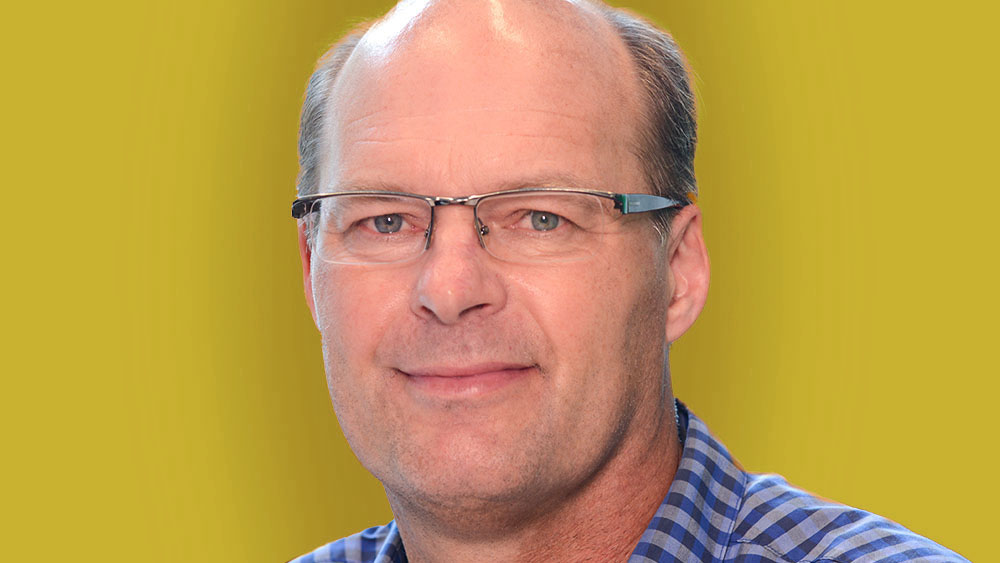
Bram Nauta is a professor of IC design at the University of Twente.

Opinion

No math in the lab!

27 March 2025
Reading time: 3 minutes

Bram Nauta scrutinizes artificially enhanced results at circuit design conferences.

The atmosphere at the conference was great. Many young PhD students like me were attending. I saw many fantastic papers on chip design! The results were sometimes ten times better than the state of the art. I saw very complex circuit diagrams with many blocks that didn’t show all those complicated details of transistors. The measured graphs looked impressive and the chip photographs were beautiful. I was excited about the burst of progress in our field.

Some older people seemed less enthusiastic. They were asking questions. I didn’t understand their agitated tone during the Q&A sessions. They said that the results were impossible and asked if they were with or without chip calibration. What a strange question to ask! Who cares?

I remember one presenting author being frank and making no effort to hide the fact that he did use calibration to improve the results. Pressured some more by an old man, the author divulged that he had used Matlab to post-process his results. In Matlab, he could do the same thing you would otherwise have to do in the digital domain on a chip. However, that would have been a lot of work to design and measure, so Matlab was a great idea for enhancing his results. The old man said, “But you don’t even mention the word ‘calibration’ in your paper!” To which the presenter countered that the paper wasn’t about calibration but about the chip – the calibration not included.

Another presentation was about a reference circuit. I learned at university that, normally, if you create a reference circuit on a chip, the value varies significantly due to process spread. You can calibrate that out, but the value remains temperature-dependent. Therefore, I understand it’s very challenging to make a stable reference on a chip that’s highly precise across different temperatures.

This particular chip produced excellent results. Thanks to the Matlab post-processing, the reference was accurate. Even if the temperature changed, the reference value stayed the same, and even the second-order derivative of the temperature dependence was zero. Why did nobody think of this earlier?

Next, I went to the session on analog-to-digital converters. Again, amazing circuits that I couldn’t understand. As usual in academic presentations, these circuits were tested with a single sine wave input, and in the digital output, we like to see the digital representation of the sine wave, with little noise and distortion. In that session, again, all papers presented excellent results. I didn’t understand the circuits, but they all used Matlab to produce an almost perfect sine wave.

What’s the point of fooling each other?

As a young and naïve student, I may have loved the conference, but today, I’m very skeptical about post-processing your results in Matlab, especially without fully disclosing what has been done. Often, authors don’t describe what they actually do and sometimes even don’t mention the post-processing at all. Yes, the results are better with an order of magnitude, but what’s the point of fooling each other? Maybe next year, there will be an analog-to-digital converter with near-zero power dissipation and near-zero area that still makes a digital sine wave with Matlab; all you need is amplitude, frequency and phase information, right? Matlab can make sine waves – there’s nothing magic there!

Young academics are under high pressure to get promoted. For that, they need to have their papers accepted at prestigious conferences. To get accepted, these papers are reviewed by people who have succeeded in publishing papers in the past. There are almost no critical outsiders anymore. We’re now in a positive feedback loop where numbers get better for the sake of getting papers accepted. Matlab seems the next level.

Conferences like to be prestigious, but if they keep accepting these papers because they want to show the best results, they’ll soon become irrelevant.
Related content

Machines that think: the design loop

European software coalition calls for €1B in research funding

Top jobs
Your vacancy here?
View the possibilities
in the media kit
Events
Courses
Headlines
  • Summit in Delft addresses Europe’s shortage of systems thinkers

    26 October 2026
  • Micron rules out 4F² DRAM in favor of continued scaling and 3D transition

    22 October 2026
  • Nvidia moves optical engines onto interposer

    22 October 2026
  • Melexis selects Neways for pressure sensor packaging

    22 October 2026
  • Amsterdam quantum venture wins Photondelta contest with chip-based atomic clock

    21 October 2026
  • Photon Bridge raises €10M to scale lasers for AI interconnects

    21 October 2026
  • Intel pitches 300mm silicon photonics with integrated InP lasers

    20 October 2026
  • New Origin photonics fab clears power and water hurdles

    20 October 2026
  • Quantinuum reports error correction advance toward 2029 quantum computer

    20 October 2026
  • Chinese startup presents 15-watt EUV source prototype

    19 October 2026
  • Terafab reportedly to receive first ASML EUV scanner in mid-2027

    19 October 2026
  • Cloud giants’ capital spending to exceed $1.5T in 2027

    19 October 2026
  • Fab construction on the rise to meet AI demand

    14 October 2026
  • ASML considers further capacity expansion beyond existing growth plans

    14 October 2026
  • Eindhoven-based chip designer Sciosense acquired by China’s Fortior

    13 October 2026
  • Dutch high-tech sector calls for lasting successor to Growth Fund

    13 October 2026
  • Spectacell raises 6 million euros for chip-based cell imaging

    12 October 2026
  • Globalfoundries targets physical AI with new FD-SOI platform

    12 October 2026
  • Besi and Applied deepen packaging collaboration

    6 October 2026
  • Xiver secures €28M for production expansion

    5 October 2026
Bits&Chips logo

Bits&Chips strengthens the high tech ecosystem in the Netherlands and Belgium and makes it healthier by supplying independent knowledge and information.

Bits&Chips focuses on news and trends in embedded systems, electronics, mechatronics and semiconductors. Our coverage revolves around the influence of technology.

Advertising
Subscribe
Events
Contact
Follow us on
High-Tech Systems Magazine (Dutch)
(c) Techwatch bv. All rights reserved. Techwatch reserves the rights to all information on this website (texts, images, videos, sounds), unless otherwise stated.
  • About
  • Memberships
  • Advertising
  • Videos
  • Contact
  • Search
Privacy settings

Bits&Chips uses technologies such as functional and analytical cookies to improve the user experience of the website. By consenting to the use of these technologies, we may capture (personal) data, unique identifiers, device and browser data, IP addresses, location data and browsing behavior. Want to know more about how we use your data? Please read our privacy statement.


Give permission or set your own preferences

Functional Always active
Functional cookies are necessary for the website to function properly. It is therefore not possible to reject or disable them.
Voorkeuren
De technische opslag of toegang is noodzakelijk voor het legitieme doel voorkeuren op te slaan die niet door de abonnee of gebruiker zijn aangevraagd.
Statistics
Analytical cookies are used to store statistical data. This data is stored and analyzed anonymously to map the use of the website. De technische opslag of toegang die uitsluitend wordt gebruikt voor anonieme statistische doeleinden. Zonder dagvaarding, vrijwillige naleving door je Internet Service Provider, of aanvullende gegevens van een derde partij, kan informatie die alleen voor dit doel wordt opgeslagen of opgehaald gewoonlijk niet worden gebruikt om je te identificeren.
Marketing
Technical storage or access is necessary to create user profiles for sending advertising or to track the user on a site or across sites for similar marketing purposes.
  • Manage options
  • Manage services
  • Manage {vendor_count} vendors
  • Read more about these purposes
View preferences
  • {title}
  • {title}
  • {title}