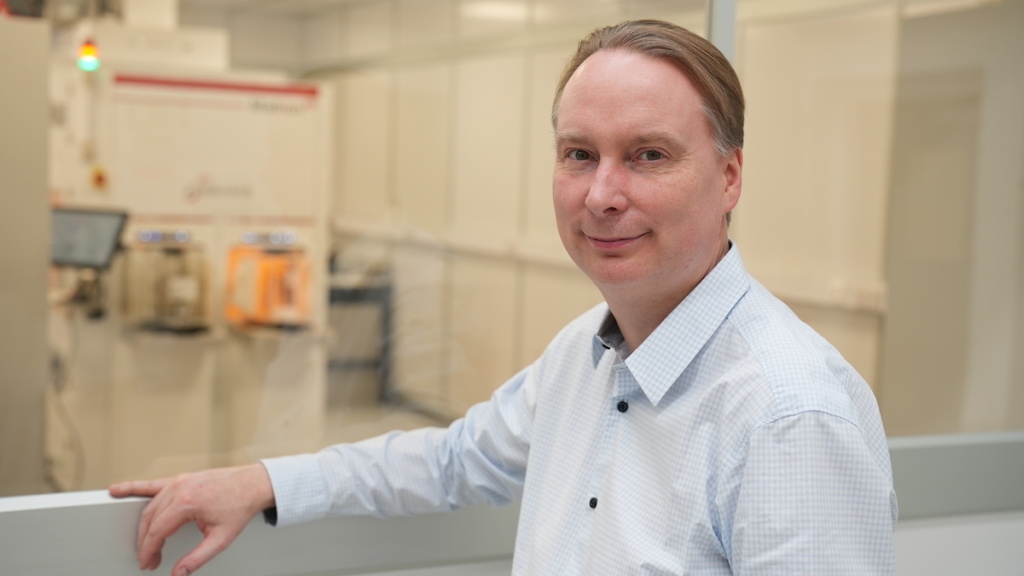

Andrew Humphris’ search to capture the movements of complex biological molecules is now resulting in a tool that supports advanced semicon production. A short history and some notes about the technology behind Infinitesima’s rapid probes.
During his PhD at the University of Bristol, Andrew Humphris built scanning probe microscopes, with the goal of imaging biological structures like RNA, DNA, and proteins. At a nanometer scale, these molecules can change very rapidly. That is why Humphris started to develop fast atomic force microscope versions, systems that would be able to capture structures real time – at video speed, if you like.
This caught the interest of fellow researchers, who became interested in the same properties. The problem: every one of them came with her or his own wish list. “Some asked me to add special electronics, others wanted special features”, says Humphris, who is now CTO at Infinitesima, the company that has its roots in his early research. The company originally focused on microscopy for R&D, and is now targeting AFM metrology for semiconductor production environments.