
Skip to content
Bits&Chips
×
×
About
Memberships
Advertising
Magazines
Videos
Contact

Log in

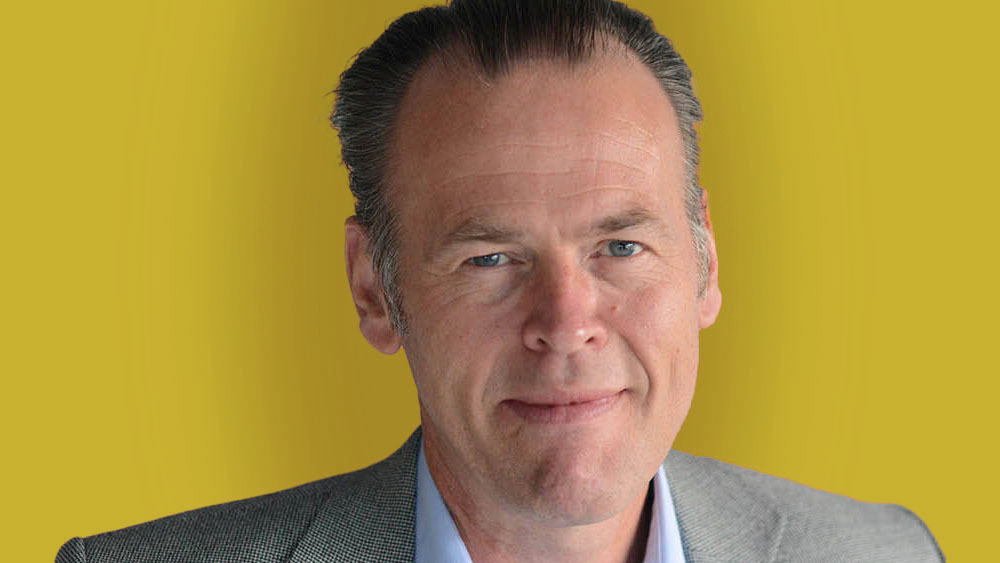
Maarten Buijs is consultant to the deep-tech industry.

Opinion

Still going west, young man?

9 September 2026
Reading time: 3 minutes

Is the US still the place to be for young aspiring scientists?

When I grew up in the sixties and seventies, my surroundings breathed Americana. Not only in consumer goods but also in technology. Everywhere, the US was the shining city on the hill. So, it was obvious that I went there after my PhD for a postdoc in the lab of professors Bloembergen and Mazur, two Dutch scientists who had left their home countries for the immense opportunities science in the US offered.

In the sixties, following the invention of the laser, Bloembergen developed the field of non-linear optics, for which he received the Nobel Prize in 1981. Mazur took over the group after Bloembergen’s retirement. Both men enjoyed the challenges and opportunities of American science and society tremendously, as so many other talented men from all over the world did over the past decades.

I often find myself wondering whether these days I’d move to the US as a young scientist, now that populism, incompetence and the negative perception of science have struck the US especially hard. The present administration tries hard to make it unattractive. The number of US student visas issued fell by about one third in 2025. On top of that, the US government is restricting access to post-grad work for international students completing degrees in the US. Sharper limits will be established on how long international students can stay in America.

Then there’s the funding. The proposed budget for next year would cut overall government spending on R&D by 22 percent, with support for the NSF reduced by 50 percent, NASA by 22 percent and the DoE’s Office of Science by 15 percent, though Congress will certainly amend this. Whether or not this will significantly reduce the attractiveness of doing R&D in the US compared to the EU from an overall funding perspective remains to be seen.

A potentially more consequential change is the implementation of the recently published report by President Trump’s director of Science and Technology Policy, Michael Kratsios. Titled “Science, a new golden age,” it intends to make government R&D in the US even more productive (or productive again, from Kratsios’ perspective).

The document aims to be the successor of “Science, the endless frontier,” drafted by Vannevar Bush for President Truman in 1945. Bush had initiated the Manhattan Project and was an outstanding engineer and inventor, potentially the most impactful one after the war. His document laid the groundwork for the organization of US government R&D, for instance leading to the foundation of the NSF in 1950.

Kratsios proposes a major redesign of how the US funds and organizes research

Kratsios studied political science, followed by a career in finance and venturing as a close collaborator of Peter Thiel. He proposes a major redesign of how the US funds and organizes research, with AI, private-sector R&D and mission-driven projects at the center. The reaction to it has been sharply mixed, but notably skeptical among academic scientists. Supporters see a needed overhaul.

The report identifies real problems, like slow grantmaking, incentives that can reward incremental work, concentration of research funding in established institutions, weak links between research and manufacturing, and the need to exploit AI. The biggest controversy is shifting money away from universities. There’s genuine merit to parts of the plan, but the proposed cure could dismantle parts of the research system that made American science successful in the first place.

All in all, I would go again if I could. The US still has boundless potential and if anything, recent developments underline the dynamism of its society. Lastly, populism, incompetence and hatred of science are on the rise in Europe too.
Related content

Machines that think: energy and the grid

European software coalition calls for €1B in research funding

Top jobs
Your vacancy here?
View the possibilities
in the media kit
Events
Courses
Headlines
  • Besi and Applied deepen packaging collaboration

    6 October 2026
  • Xiver secures €28M for production expansion

    5 October 2026
  • Report calls for blanket ban on DUV immersion exports to China

    5 October 2026
  • ASML’s Jos Benschop joins TNO supervisory board

    5 October 2026
  • Imec to test Alixlabs’ pitch-splitting process on full wafers

    1 October 2026
  • Dutch detectors to help NASA telescope see faint infrared sources

    30 September 2026
  • Eurofiber and Delft Networks prepare quantum link between Delft and Rotterdam

    30 September 2026
  • European software coalition calls for €1B in research funding

    30 September 2026
  • NXP-VIS joint venture weighs second Singapore fab

    29 September 2026
  • McKinsey raises 2030 chip market forecast to $2.3T

    29 September 2026
  • Twente puts superconducting magnetic sensor atop nanopyramid

    28 September 2026
  • National investment institute seeks more capital

    28 September 2026
  • CEO change at anode producer E-magy

    28 September 2026
  • AI drives high-end packaging market past $51B by 2031

    25 September 2026
  • ABP commits €1B to European tech scaleups

    24 September 2026
  • Americans scale silicon anode technology in Dutch demo plant

    23 September 2026
  • IC-Link joins TSMC cloud alliance for advanced-node chip design

    23 September 2026
  • Dutch and German innovation agencies put €40M into AI chip design

    23 September 2026
  • Morphotonics bags €40M to focus on waveguides for smart glasses

    23 September 2026
  • Smart Photonics and Globalfoundries launch joint photonics foundry service

    22 September 2026
Bits&Chips logo

Bits&Chips strengthens the high tech ecosystem in the Netherlands and Belgium and makes it healthier by supplying independent knowledge and information.

Bits&Chips focuses on news and trends in embedded systems, electronics, mechatronics and semiconductors. Our coverage revolves around the influence of technology.

Advertising
Subscribe
Events
Contact
Follow us on
High-Tech Systems Magazine (Dutch)
(c) Techwatch bv. All rights reserved. Techwatch reserves the rights to all information on this website (texts, images, videos, sounds), unless otherwise stated.
  • About
  • Memberships
  • Advertising
  • Videos
  • Contact
  • Search
Privacy settings

Bits&Chips uses technologies such as functional and analytical cookies to improve the user experience of the website. By consenting to the use of these technologies, we may capture (personal) data, unique identifiers, device and browser data, IP addresses, location data and browsing behavior. Want to know more about how we use your data? Please read our privacy statement.


Give permission or set your own preferences

Functional Always active
Functional cookies are necessary for the website to function properly. It is therefore not possible to reject or disable them.
Voorkeuren
De technische opslag of toegang is noodzakelijk voor het legitieme doel voorkeuren op te slaan die niet door de abonnee of gebruiker zijn aangevraagd.
Statistics
Analytical cookies are used to store statistical data. This data is stored and analyzed anonymously to map the use of the website. De technische opslag of toegang die uitsluitend wordt gebruikt voor anonieme statistische doeleinden. Zonder dagvaarding, vrijwillige naleving door je Internet Service Provider, of aanvullende gegevens van een derde partij, kan informatie die alleen voor dit doel wordt opgeslagen of opgehaald gewoonlijk niet worden gebruikt om je te identificeren.
Marketing
Technical storage or access is necessary to create user profiles for sending advertising or to track the user on a site or across sites for similar marketing purposes.
  • Manage options
  • Manage services
  • Manage {vendor_count} vendors
  • Read more about these purposes
View preferences
  • {title}
  • {title}
  • {title}