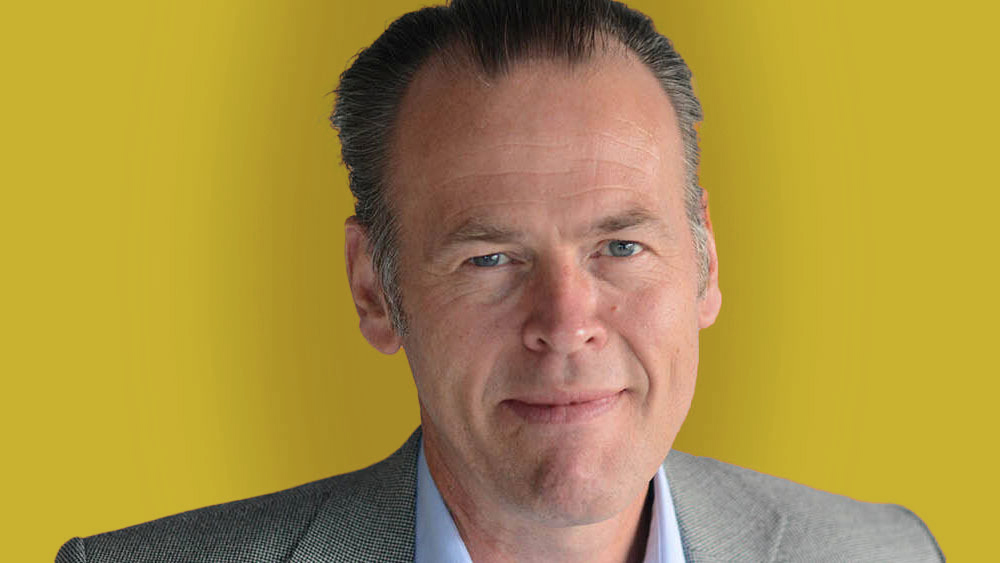
Jan Bosch expects the greatest benefits of AI in personal assistants, robotics and scientific breakthroughs.
One of the reasons I feel that we need a revival of techno-optimism is the way the emergence of artificial intelligence (AI) in the last years has been met by society. Rather than celebrating the enormous technological breakthroughs that were made and the immeasurable benefits this will provide to all of us, everyone seems to focus on risks and fears.
Now, I’m not so naive that I don’t see any potential risks with AI, but in my view, this has been the case for each and every technology humankind has developed in its history. Dynamite didn’t only improve the mining process but also changed the nature of wars. Still, most of the time, we’re not at war and we’re reaping the benefits from a new technology.
Artificial intelligence has its limitations but offers the potential to enormously improve the quality of human life. Not just in the Western world, but globally. The main areas where I expect the greatest benefits are threefold: personal assistants, robotics and scientific breakthroughs.
First, similar to GPT-4o today, we’ll see an increasingly frequent use of AI in the role of personal assistant. This can be as a tutor, a healthcare coach or any other role that you think of. Imagine that every child on this planet has an AI tutor that’s trained using the data from the most erudite teachers in the world and adjusts itself to the specific needs of each individual. Or imagine an AI agent that helps you adjust your lifestyle to avoid the primary risks of the “four horsemen,” ie heart disease, neurodegenerative diseases, cancer and diabetes. These diseases don’t just randomly happen but instead often are the results of decades of poor life choices. An AI agent could, based on our genetic predispositions and lifestyle, help us live much longer, healthier and more fulfilling lives.
Second, every time a new technology is introduced, we worry about the loss of jobs and how this is going to affect society. Many refer to the Luddites, who broke into textile factories and demolished the machines in an attempt to maintain the cottage industry of textile manufacturing. Today, everyone laughs at these backward idiots, but of course, there’s no difference at all right now with the concerns about AI taking all our jobs. Robotics, both in the form of humanoid robots as well as dedicated machines such as autonomous vehicles, will for sure take many jobs or part of jobs. However, this is how the economy improves productivity and makes everyone more prosperous. And over the last centuries, we’ve always created new jobs to replace the ones that were lost and there’s no reason to assume things will be different now.
Interestingly, many seem to ignore that the jobs that are lost aren’t necessarily the most fulfilling and exciting. For instance, for all that I appreciate truck drivers and their role in society to satisfy our logistics needs, I wouldn’t want to be the person staring out of a windscreen for hours on end while driving a truck. Or to be the radiologist who’s forced to look at hundreds of medical images per day to identify anomalies. These jobs are much more suitable for robots that can be trained on the available data, never get tired and approach each and every case with the same level of vigor and quality.
Third, science is very often constrained by the limitations of the human intellect. We can simply only have so much information in our heads – traditional psychology research claims at most 7 +/- 2 items at the same time. The way many machine learning models are shaped removes that limitation in many contexts, allowing for much wider cross-correlation and combination of data and research results. This will allow for a major acceleration of scientific progress. Not because machine learning models will take over from scientists but because researchers and AI agents work in a synergistic relationship allowing for a combination of the best of both worlds. For instance, an AI agent doesn’t mind testing thousands of very unlikely hypotheses, but a human will get bored, make mistakes and generally generate less reliable outcomes.
Of course, there are many other areas where AI and ML will have a major impact, including smart cities, environmental sustainability, finance and decision-making in general. In fact, in my view, I think we’ll see that AI will have a major impact on some of the grand challenges of our age, such as eradicating poverty and managing infectious diseases globally.
With all these enormously positive outcomes of the broad adoption of AI and ML, it’s mind-boggling to see the fear, uncertainty and doubt (FUD) in society. During recent years, the European Union has, among many others, published GDPR, the Data Act, the Cyber Security Act, the Cyber Resilience Act, the Digital Market Act, the Digital Services Act, the AI Act, the Product Liability Act and the Product Sustainability Act. It’s as if we’re intentionally trying to hamper European companies in their already challenged competitive position. And, of course, the reaction of global companies is to innovate elsewhere in the world. For example, one of the European companies I work with has fully autonomous vehicles on the road and in operation in the US but not in Europe as the regulatory framework is so debilitating that it’s virtually impossible to get beyond the test track here in Europe.
Although I believe that the intent behind all these acts and regulations is to protect the European citizenry, which is of course a laudable intent, the consequence is that Europe is becoming the backwater of the world when it comes to the adoption of new technologies and building innovations on them. I really hope that our political leadership comes to its senses and stops trying to resist change, which is inevitable and desirable, but rather seeks to achieve equitable adoption of these technologies to the benefit of everyone in Europe.
Artificial intelligence will be such a boon for humankind! Imagine every child having his or her AI tutor. Every individual on this planet having their personal agent to live long, healthy and fulfilling lives. An order of magnitude faster rate of scientific progress. Addressing grand challenges such as global poverty. Literally, not even the sky is the limit any longer. To end with a quote from Sundar Pincai, the CEO of Alphabet: “Artificial intelligence will have a more profound impact on humanity than fire, electricity and the internet.” What a time to be alive!