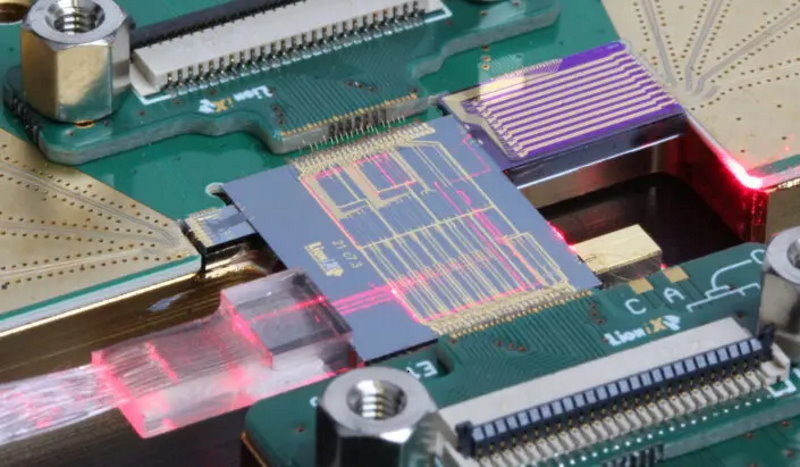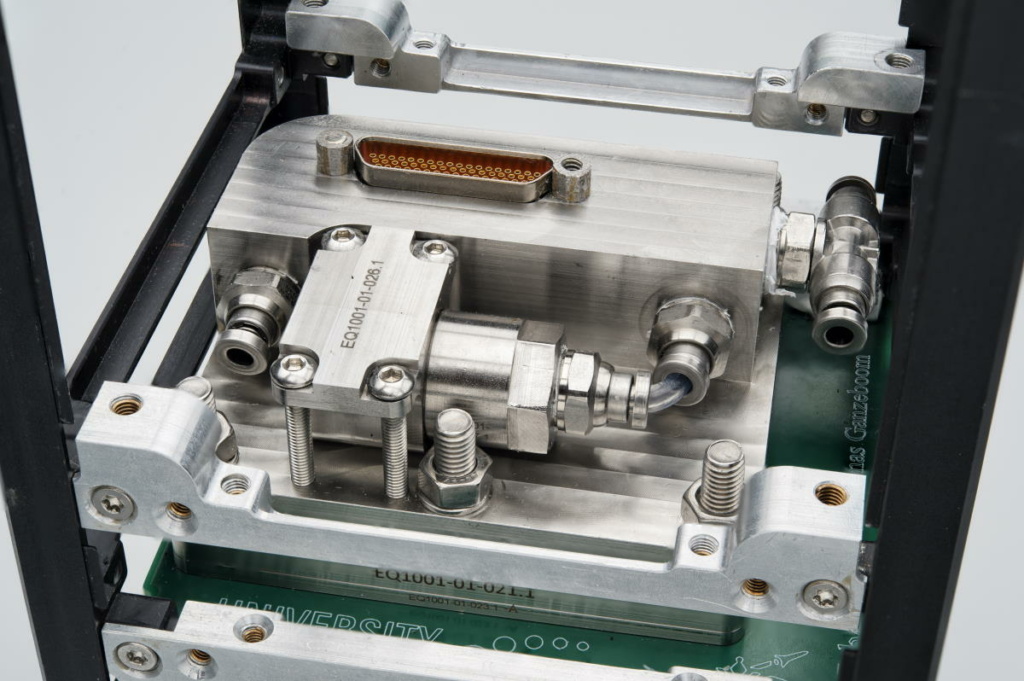
From defense to telecommunications and Earth observation to space exploration, cubesats have become a critical tool in expanding our horizons. But as the technical demands of the domain increase, power densities and subsequent temperatures are also on the rise. To help keep these temps in check, NLR and ISISpace have joined forces to keep the satellites, and their system engineers, cool.
Cubesats are a vital source for gathering information about the planet and its surrounding area. As satellite technologies continue to advance, these space-borne sensors have become more affordable and much more accessible. But as they get more popular, domain expectations are growing – demanding higher technical needs and larger payloads, resulting in increased power densities and rising temperatures of the onboard electronics. To keep the burgeoning technology from overheating, and its system engineers from breaking into a sweat, NLR is teaming up with Delft-based satellite integrator ISISpace on a mission to create new thermal modeling and dissipation concepts to cope with rising temperatures.
Through research and first-hand experience in the cubesat industry, NLR and ISIS have narrowed the thermal issues down to a few main gaps, or problems to solve. First is hardware design, which makes updating thermal controls difficult to implement and integrate. Next is knowledge, or the lack of insight and information on thermal properties like the transfer of heat through common elements of cubesats through conductive coupling or contact conductance. Finally, linked to this lack of information, is the verification and validation of systems with only basic modeling and testing.