As global discussions on sustainability intensify, the Amsterdam-based tech company Asperitas is making its mark in the data center industry with its immersion cooling technology. Compared to the more traditional air cooling methods, immersion cooling has a better power usage effectiveness and can facilitate a density that’s five to ten times greater. And with its lack of moving parts, the Asperitas solution improves reliability and even allows the use of waste heat from an edge data center to warm up neighboring houses.
Last year, the European Energy Efficiency Directive underwent a significant revision. The aim of this revamp was to help the European Union meet its target of reducing greenhouse gas emissions by at least 55 percent (compared to 1990) by 2030. The revised directive introduced an obligation to monitor the energy performance of data centers.
“By May 2024, almost every data center will be required to report on its energy performance,” explains Maikel Bouricius, CMO at Asperitas. The company, based in Amsterdam and established in 2014, launched its first data center cooling solution in 2017. Its expertise lies in immersion cooling, a technique in which entire servers are immersed in a dielectric, electrically non-conductive fluid that has a notably higher thermal conductivity than air.
The revised European Energy Efficiency Directive also mandates that data centers reduce their power usage effectiveness (PUE) to 1.5 by 2026, and then further cut it to 1.3 by 2030. “Our immersion cooling systems, which have a PUE of 1.14, can play an instrumental role in meeting these challenging requirements,” asserts Bouricius.
Rising challenges
The shift toward immersion cooling isn’t purely driven by legislative requirements, though. Asperitas’ research shows that the biggest industry challenges for their customers are performance, sustainability, reliability and costs. Immersion cooling directly addresses all of these concerns, says Asperitas CTO Andy Young, pointing out that the challenges are rising. “Data center workloads aren’t just growing but are also increasing in intensity, even at the edge. IoT applications are typically low-power, yet abundant. But now, IoT is transitioning to moderate power with an even larger volume.”
Consequently, power demand is on the rise. And given the finite supply of energy available, data centers should use the energy for their workloads as efficiently as possible. Bouricius adds that the purpose of Asperitas is to support data center operators and users to unlock sustainable growth. “Everyone wants advanced computing workloads, but they need infrastructure that can facilitate that.”

Less overhead power
Immersion cooling has a series of distinct advantages when compared to the more traditional method of air cooling, states Young. “When electrical power arrives at the data center, it splits into two paths. The critical power is directed at the IT systems. This is useful power for running your workloads. The overhead power goes to all the supporting infrastructure, of which the majority is allocated for cooling. Every data center aims to minimize overhead power. The entire proposition for liquid cooling is that it’s far more effective than air cooling. Among the various liquid cooling options, immersion cooling is again the most effective method, simply because you don’t need to route cooling to individual server components.”
In comparison to an average air-cooled data center, immersion cooling can facilitate a density that’s five to ten times greater. With no necessity for air to cool the systems, large rows of immersed servers can be accommodated in surprisingly minimal space. Additionally, CPUs can operate at full throttle continuously, which increases the average performance by as much as 40 percent.
Even critical power can be minimized with immersion cooling, notes Young. “Not all critical power destined to the workload finds its way into the workload, due to inevitable power distribution losses. Compared to air cooling, immersion cooling not only reduces overhead power use by 23 percent, thanks to the elimination of fans and compressors, but also reduces critical power use by a similar proportion.”
TCO
This reduction in power and space, as well as the performance improvements, make the total cost of ownership (TCO) a critical part of the value proposition of immersion cooling, maintains Young. “There are significant savings to capex and opex available for data center operators and users alike. The position of Asperitas solutions and services enables us to understand how to leverage immersion cooling to maximize cost-effectiveness and reliability for our customers.”
Bouricius is keen to emphasize that Asperitas regards itself more as a thermal management provider than as an immersion cooling provider. “We don’t just deliver a tank to a customer to immerse their servers in. Instead, we offer a comprehensive end-to-end service that enables data centers to run their workloads while staying within their power, cooling and floor space constraints.”

Sustainability
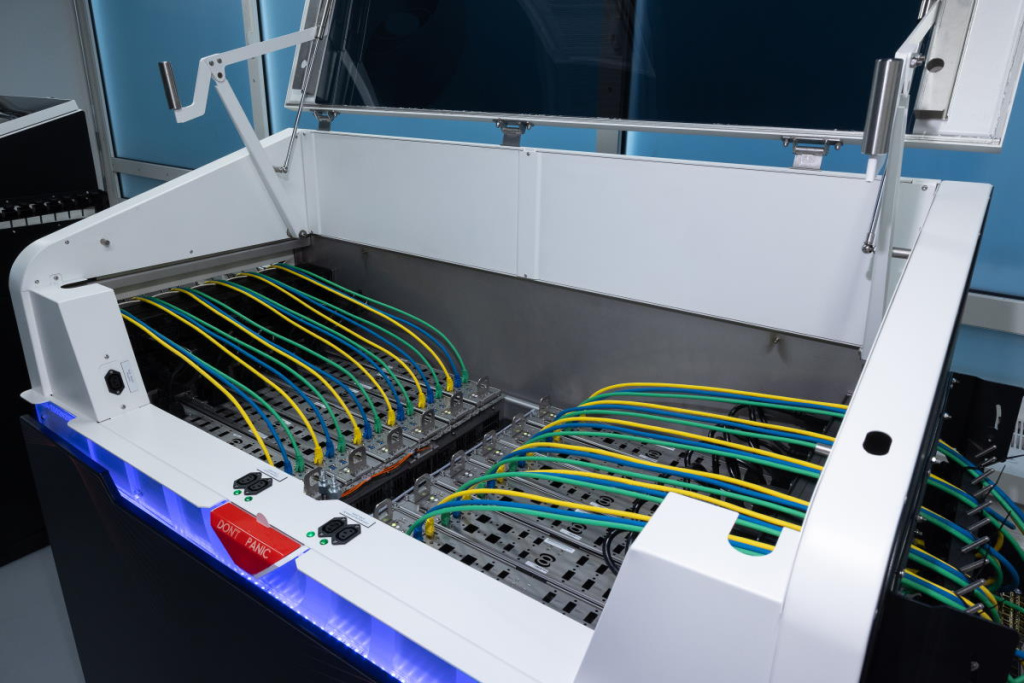
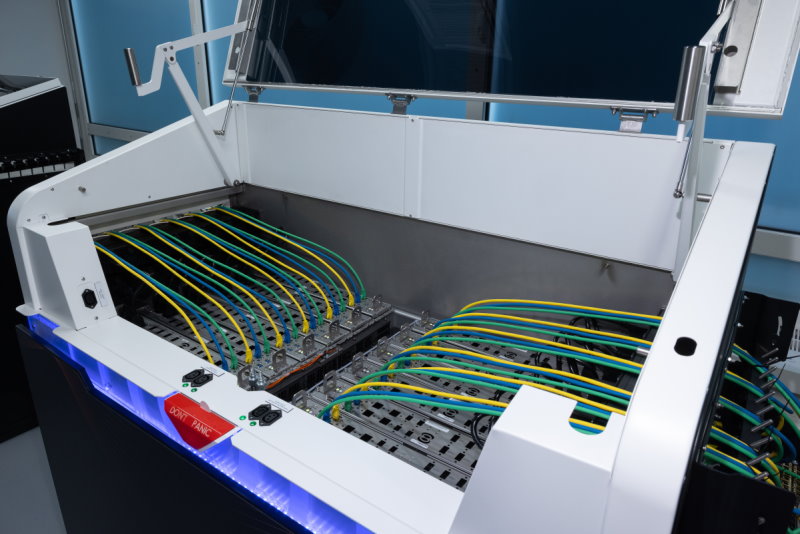
When the company started, Asperitas was very innovative with its use of natural convection to circulate the dielectric liquid for heat transfer, implementing an immersion cooling system devoid of pumps. “This passive cooling is a sustainable and efficient method that’s compatible with many use cases,” elaborates Bouricius. “The absence of moving mechanical parts results in a particularly energy-efficient method of cooling.”
Moreover, the heat captured in the liquid isn’t wasted. It can be used to heat houses or even greenhouses for plant cultivation, as explained by Young. “With the current trend to scale out workloads to remote locations, you can put an edge data center with immersion cooling next to a residential area. There are no noisy fans or compressors, and the waste heat from the immersion cooling can be used to warm up the neighboring houses.”
Reliability
According to Young, an often overlooked advantage of immersion cooling is the improved reliability it brings to the immersed servers. “If you immerse a server in a cooling liquid, it cools the entire server, not just the CPU and GPU. The steady conditions in which the server operates, with only minor temperature fluctuations, greatly reduces the thermal expansion stress on all electronic components.”
A related advantage of completely immersing the server is that no oxygen or dust particles can come into contact with the components. “Whether it’s a high-power GPU or a memory module, the liquid protects all of them from oxidation or other types of physical degradation over time. Every single component in a server is important for reliability.”
Standards and expectations
Asperitas has also been an active participant in the Open Compute Project (OCP), an international non-profit organization that shares designs of data center products and best practices. “We pioneered immersion cooling as part of the OCP’s Advanced Cooling Solutions,” shares Young, “and we maintain a leadership role in this OCP project. Our objective was to understand the requirements necessary to make immersion cooling viable at a commercial scale. Together with the OCP community, we developed these requirements and published guidelines about immersion cooling systems. The Open Compute Project is a great community to set standards and expectations. It was a significant milestone for us to see immersion cooling recognized as an accepted project within OCP.”
As part of its activity within the Open Compute Project, Asperitas played a key role in introducing Shell to this community, underscores Bouricius. “We’ve been collaborating with Shell since 2019 for fluid materials. They developed their S5X hydrocarbon fluid specifically for immersion cooling. In 2020, Shell joined OCP as a platinum member and since then, they’ve become a strong driver in the material compatibility project.” Asperitas has also formed strong relationships with Intel and AMD within the Open Compute Project. “What I appreciate about OCP is that it’s about more than just standardization. It’s also an arena where innovation happens. The community truly acts as an accelerator,” affirms Bouricius.
Field lab
More recently, Asperitas received funding from the Dutch Ministry of Economic Affairs and Climate as part of a consortium of seven Dutch companies and research institutions. Aside from Asperitas, the consortium consists of Betterbe, Deerns, Eurofiber, NBIP (National Internet Providers Management Organization), TNO and the University of Twente. This collaboration is part of the Important Projects of Common European Interest – Cloud Infrastructure and Services (IPCEI-CIS) program.
Bouricius explains that the consortium focuses on developing a new modular, sustainable and secure-by-design concept to be deployed in locations close to the end users. The guiding principle is to achieve a substantial reduction in total energy consumption, from cooling to computing power and data flows. “As part of this initiative, a field lab will be built where different innovations will be tested and validated, including advanced cooling methods, clean energy solutions and software optimizations. We’re proud to be the lead partner of this program, as a data center hub such as the Netherlands certainly deserves such a field lab.”
Modularity
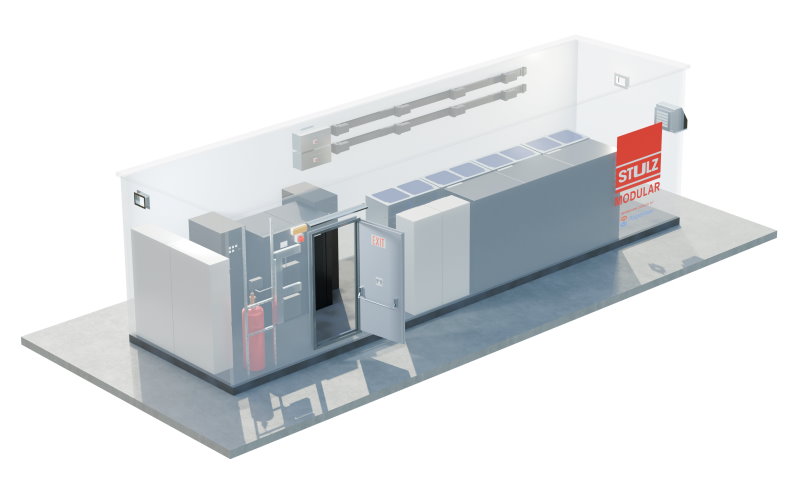
According to Bouricius, there’s now a strong demand for modular data centers, enabling companies to scale up quickly. “Modular data centers already existed a decade ago, but it isn’t until now that we’re seeing real use cases, for example in AI. However, if you want to deploy a bunch of GPUs for AI applications, can your data center space scale up with the compute side?” To address this concern, Asperitas is collaborating with Stulz on a prefabricated data center space. This is an all-in-one concept offering power, cooling and security infrastructure that can be tailored to customer requirements to create a full solution.
“As a user of this solution, you just share your requirements and you receive a piece of infrastructure that has been designed for purpose, prefabricated and tested. You can add it to your existing data center or perhaps position it in a parking lot, or next to a base tower if you’re a telecom provider,” explains Bouricius. “Our immersion cooling solution is integrated into this prefabricated data center.”
This article was written in close collaboration with Asperitas.