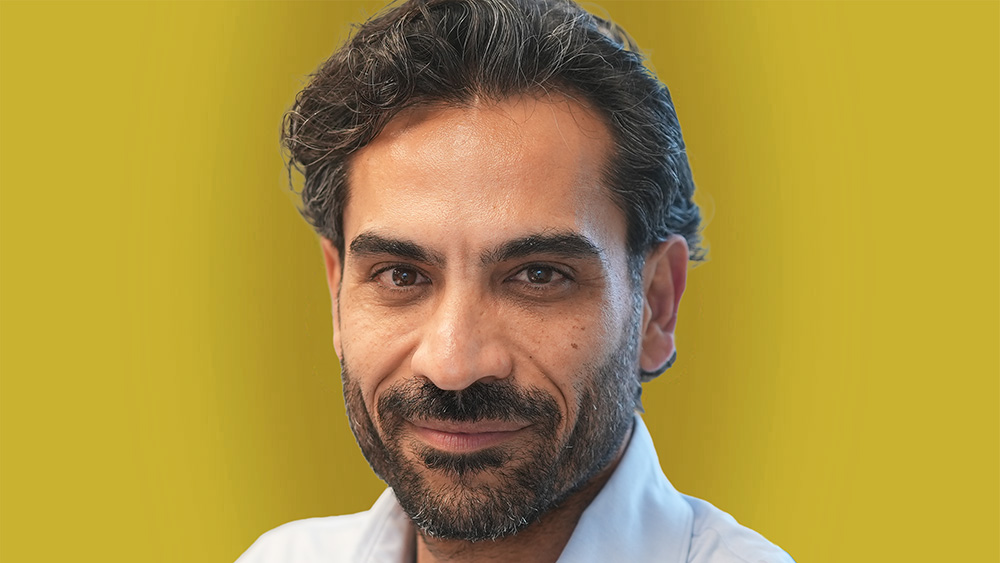

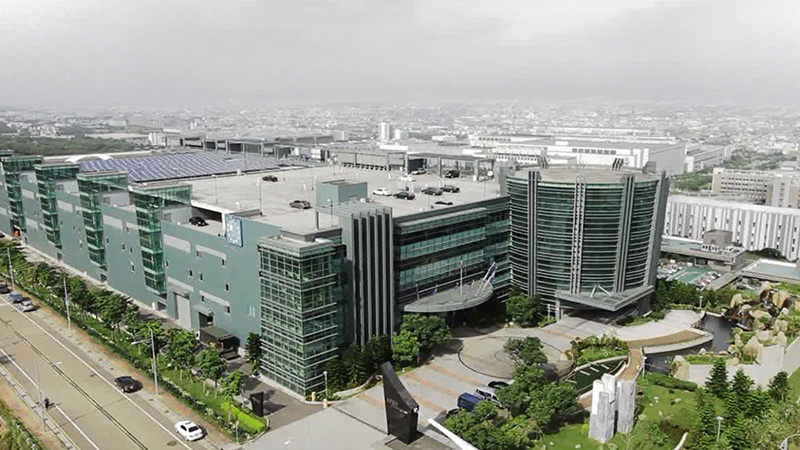
Taiwanese entrepreneur Robin Chang built Apex Dynamics single-handedly into a company now worth billions. The manufacturer of planetary gearboxes operates at the same level as its German competitors in terms of scale and quality. Bits&Chips spoke with Apex Dynamics CEO Arthur Kuo at the company’s headquarters in Taichung, Taiwan.
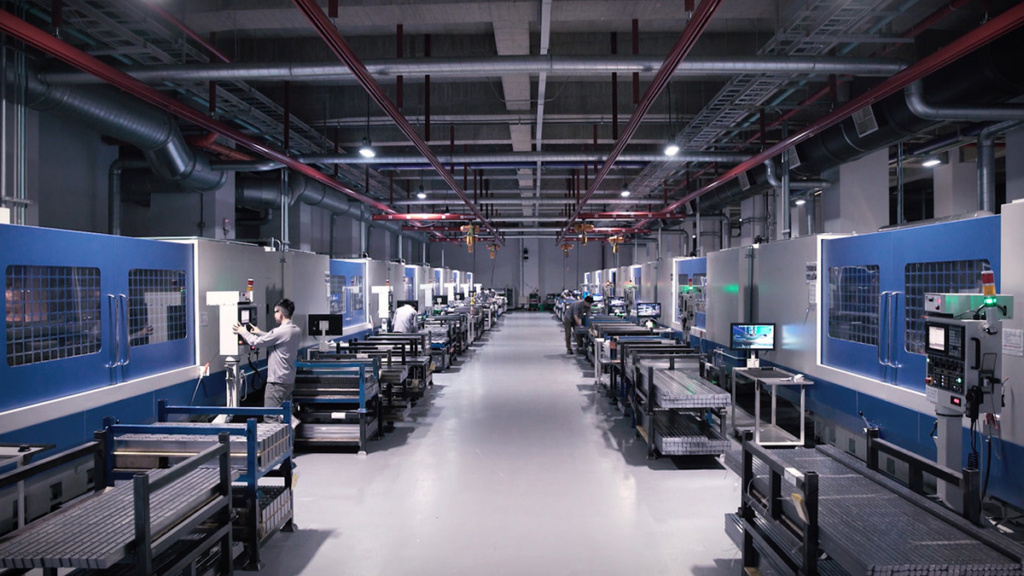
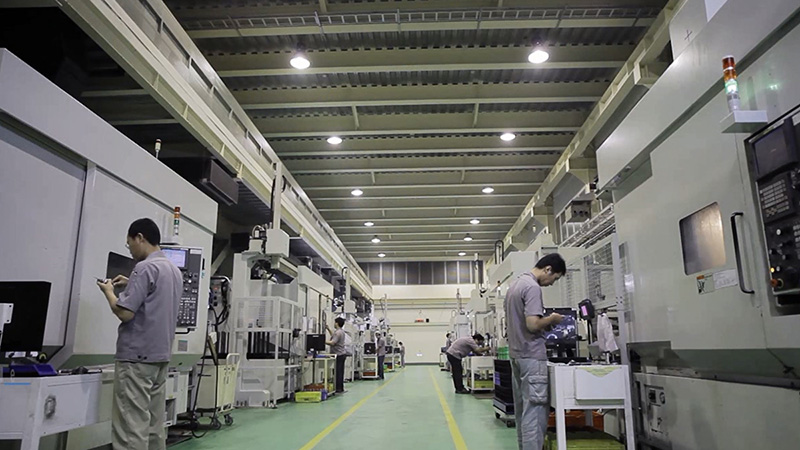
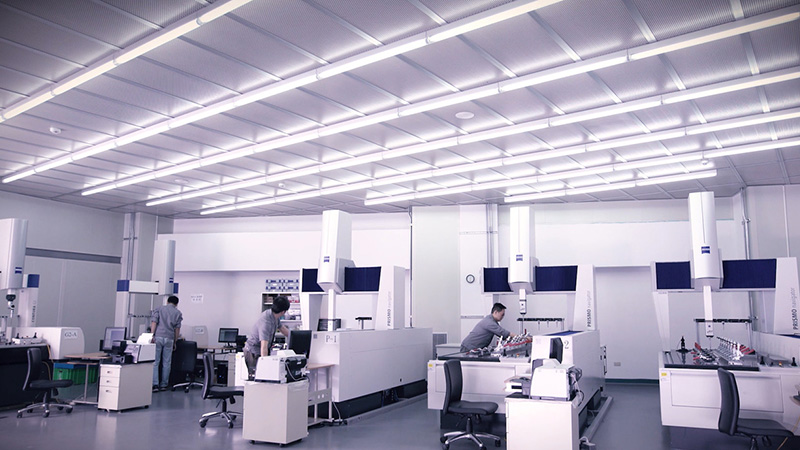
Anyone entering the Apex Dynamics factory in Taichung, Taiwan, will encounter a familiar production environment filled with CNC machines, metrology setups and assembly lines. However, the essence of the company’s manufacturing technology isn’t immediately visible, CEO Arthur Kuo explains while guiding his visitor through the facility, together with Thom van Oss from Apex’s Dutch office. Production control at the micron level depends largely on mastering physical boundary conditions such as temperature and vibration.
“The main production flow is underground,” says Kuo. While Apex’s core business is planetary gearboxes, the manufacturing conditions are especially important for tooth racks. “These can be long, and the production is very sensitive to temperature changes. Conditioned steel is extending or shrinking 0.12 microns per degree Celsius and the precision we ask for our racks is under 12 or 13 microns per meter.”
This means temperature fluctuations must effectively be eliminated. At the operating temperature of 20 degrees Celsius, Apex allows a variation of only plus or minus half a degree.
Vibrations are another major disturbance source, Kuo points out. “This is an earthquake and typhoon-sensitive area. So, if you want to be able to manufacture very precise parts, you need a very stable floor and construction.”
High-end German
The success of Apex Dynamics can be traced back to a practical supply chain problem. After founding the company in 1987, Robin Chang initially focused on gantry robots for injection molding machines. For each robot axis, he required low-backlash reduction drives, which he initially purchased from German and Japanese suppliers.
At the time, Chang ran into problems with the unpredictable delivery times of these critical components. “Long lead times were one thing – but the real problem was the uncertainty,” Chang said in an interview with Business Today around his company’s IPO in 2022. The uncertainty wasn’t only about throughput time, but also about the lack of transparency. Orders – usually placed with German manufacturers – could take months, and delays were either not communicated or communicated very late. As a result, customers began questioning the young company’s planning and delivery reliability.
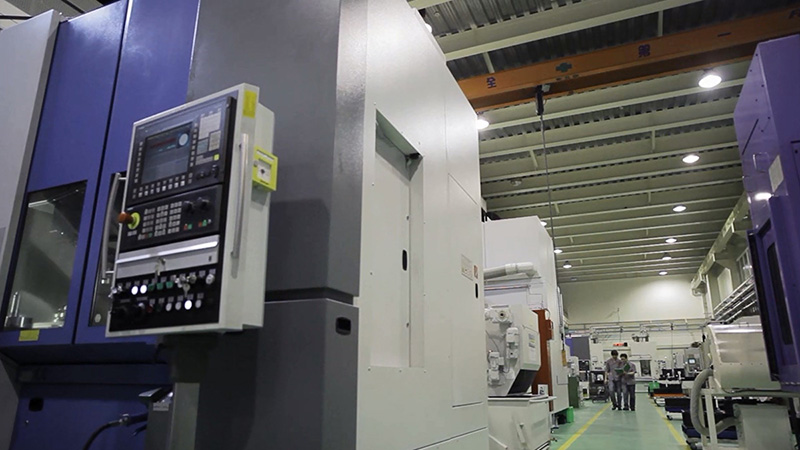
Chang therefore decided to develop, manufacture and sell gearboxes himself. That meant entering a market that at the time was almost entirely dominated by established German brands with decades of experience. He deliberately chose high-end German CNC machines to compete with Japanese and German rivals on their own turf.
The required investments also turned out to be far larger than expected. Chang told Business Today that he eventually invested 600 million Taiwanese dollars (16 million euros) over five years and still had nothing in hand. “Losses every year. Everything I could sell I invested.”
For years, Chang put everything on the line. “Factories, houses – everything was collateral. But I had started from zero, so the worst that could happen was ending up at zero again.”
The technological breakthroughs came after years of development and continuous optimization, during which Apex succeeded in achieving micron-level tolerances and competing directly with German and Japanese players. That laid the foundation for the world-class position the company ultimately achieved.
Apex thus became a Taiwanese example of the broader shift from contract manufacturing toward high-end branded precision components. Today, it’s one of the world’s largest manufacturers of low-backlash planetary gearboxes in terms of unit volumes, quality and service. In terms of brand recognition and image, a German brand still ranks number one, Arthur Kuo acknowledges, but according to him, Apex Dynamics has now surpassed the Germans in sales volume.
Delivery
Kuo and Van Oss don’t present quality as a differentiator, but rather as a prerequisite. “If you don’t have quality, there’s no point even talking,” says Van Oss.
Kuo adds: “What’s important for the end customer? Four things: quality, price, service and delivery. If you have a very high quality but a very high price, you can’t sell your goods. If you have a low price but bad quality, or good service but no product, you can’t sell your goods either. Delivery is the real thing.”
That positioning follows directly from the strategy founder Chang adopted. Instead of competing on price or brand recognition, he chose delivery time as the key differentiator. “With delivery times of less than three days, I could distinguish myself,” he said during the IPO in 2022.
Competing on delivery speed sounds simple, but it has far-reaching implications. It means Apex maintains large inventories and huge production pipelines – a capital-intensive strategy that involved significant risks in the company’s early years. Kuo describes the current approach: “We have to serve our customers quickly, even if it’s not in stock. The worldwide delivery of Apex from Taiwan is within a week. The most popular models you can hand carry out today. To get other standard products, it usually takes one week or even three days. So, to make it quick, we need production capacity and we need stock.”
Forget specials
Speed lies at the heart of the Apex strategy, and standardization makes it possible. Without a standardized portfolio, delivery times simply can’t be reduced from months to days. Kuo explains that Apex can help customers in almost all cases because of its extensive portfolio. “We have around 5,000 standard models, meaning different series, different sizes, different ratios.”
That enormous variety – including inventory – is a deliberate strategy to keep delivery times short and complexity manageable. “We try to convince customers to use standard products as much as possible because that means short delivery times and standard high quality. In case of calamities, you can easily exchange,” says Kuo. “Customized products take more time and are more expensive.”
In practice, customer engineers don’t automatically follow that logic. Thom van Oss explains the tension involved: “Engineers calculate, for instance, that the ideal reduction ratio is 7. Out of engineering pride, they want to stick to that. We have to convince them that 5 or 10 are perfectly fine as well and offer all the advantages of the standard version.”
The example may seem trivial, but it touches on a fundamental issue seen throughout industry: Engineers optimize their designs on the computer without taking component availability or overall system costs into account. “If you want to design a good system that includes the business case and considers all boundary conditions, you need to involve the supplier of the standard components at an earlier stage.”
That still doesn’t happen often enough. Experience shows that customers frequently approach Apex late in the process. “Very often, we get an order only three weeks before the machine is built. They design, they prototype and then just before production, they order the components.” That creates risks. “If something happens – a typhoon, Covid, whatever – you have a problem.”
Apex tries to guide, coach and educate customers. Kuo: “We start by saying: Forget specials, try to solve it with standard components.”
Vertical integration
At the same time, customization often becomes input for future standardization. “Very often, we receive very good requests. Sometimes, customer needs are so good that we bring them here and say: hey, this could help us in the future.” Kuo gives the example of a gearbox for the food industry. “This FDA-compliant product started in Germany because customers needed it to export to the USA. It became a standard product and we can now deliver it worldwide.”
That dynamic – from specific request to generic solution – forms one of the mechanisms behind the growth of the product portfolio. Ideas come from Apex’s worldwide network of 39 exclusive representatives. Kuo: “They sense the requirements of the local industry and bring it here, after which HQ runs it globally.”
At the same time, Apex deliberately spreads its activities across many different markets. The manufacturer is strong in semiconductors, food, printing and agriculture, “but we’re not aiming at specific markets.” This diversification reduces risk and increases the likelihood that innovations in one sector will find their way into other applications.
The Taiwanese precision specialist also opts for vertical integration. “All the steps from design to manufacturing we do ourselves,” says Kuo. “We don’t outsource key processes because outsourcing means you need to wait.”
That doesn’t mean Apex operates in complete isolation, Kuo emphasizes. “We have a network of suppliers, but the critical processes remain internal.” Van Oss adds: “If we depended on suppliers for critical parts, we would be waiting in the same queue as everyone else.” He also points out that the blockage of the Suez Canal during Covid demonstrated how fragile the system is. “We’re highly dependent on external factors anyway, and that’s changed the industry’s thinking about supply chains. Just-in-time was for years the ultimate model for efficiency. Now, we see how vulnerable that is.”
Incidentally, these vulnerabilities have had little impact on customer behavior. Van Oss: “They still order late and expect immediate delivery.”
This creates tension, but it’s also part of Apex’s proposition. In effect, the company functions as a buffer within the supply chain. By maintaining inventory and reserving production capacity, Apex absorbs uncertainty, says Kuo. “Commercially attractive, but organizationally also very complicated.”
The challenge is amplified by the breadth of the portfolio. With thousands of product variants and a global customer base, planning production and inventory has become a data-driven operation. Kuo: “We know every day what kind of gearboxes our agents order or deliver, and we plan and respond quickly. We analyze the demand and prepare the stock accordingly.”
Human factors
Several parts of the conversation make clear that human factors are at least as decisive for product quality and reliability as technology itself. Kuo illustrates this with an example from his earlier international experience at a global manufacturer. “They built a factory in Shanghai with exactly the same machines and exactly the same processes as in their native country. Everything was copied one by one. But the quality was different. And the difference was not in the machines – it was in the people.”
That observation touches on a sensitive aspect of globalization and manufacturing. Technology is transferable and processes are reproducible, but craftsmanship and culture are far less so. “People make the difference. You can have the same machines, but if people aren’t trained in the same way, you won’t get the same result,” says Van Oss.
Within Apex, this translates into a strong focus on training and process knowledge. The organization consists of a relatively small group of R&D engineers and a much larger production workforce. “We value R&D as much as production,” says Kuo. Much of the value lies in process mastery rather than in the designs themselves.
There’s also a clear distinction between design and process optimization. “We have two groups of engineers. One is responsible for design and the other for improving the production process.” That second group is crucial for achieving consistent quality at scale. The challenge isn’t only to invent a product, but to manufacture it repeatedly within the specified tolerances.
Low failure rates
The result of that approach is visible in the low failure rate. “Our claim rate is below 0.02 percent,” notes Kuo. Remarkably, according to Apex, a large share of problems isn’t caused by the product itself, but by the way customers use it. Van Oss: “In many claim cases, 80-95 percent of the gearboxes aren’t used correctly.”
Apex’s role is gradually shifting from pure supplier to technical partner. That role is reinforced by the company’s worldwide network of representatives. Apex prefers this network of local partners over a centralized sales organization. “We have many ‘Thoms’ around the world,” Kuo says with a smile, referring to his Dutch representative. “Local people understand the culture, the language and the application better. That helps a lot.”
This decentralized approach allows Apex to stay close to customers and respond quickly to questions and problems. At the same time, the network acts as an information source for the headquarters in Taichung. Market developments are identified locally and fed back into product development and strategic decisions.
The semiconductor industry is perhaps the clearest example of a market shaped by the dynamics of Apex. Precision and reliability are critical there. In chip manufacturing, errors immediately translate into high costs. Tolerance for deviations is minimal. “In semiconductor machines, you need to place wafers in very narrow slots. If the positioning isn’t exact, the wafer will break. So, the precision requirement is very high,” Kuo explains.
Semicon is a growth market, but Apex deliberately maintains diversification to reduce risks and preserve flexibility. “We’re in semiconductors, but also in food, printing, agriculture and logistics,” says Kuo. Diversification also means that developments in one sector often find applications in others.
AI is beginning to influence demand for Apex products. “For AI, you need semiconductors. And if semiconductors grow, we grow,” says Kuo. “Digital AI can’t walk, work or manufacture. For that, you need robots.”
Europe
Apex supplies components for Tesla production lines, among others. Van Oss gives another example from the electronics industry, describing a project in which the company delivered gearboxes on a large scale for smartphone production test systems. “For smartphone-related production lines, we delivered tens of thousands of gearboxes in a very short time. Our competitors could not deliver that fast. That was the difference.”
At the same time, Apex explicitly positions itself in the higher end of the market. The company doesn’t see competition as a direct threat. “Everyone can make a cheap gearbox, but not everyone can achieve consistent quality in high-end products in huge quantities and deliver it with the same reliability,” says Van Oss.
According to him, the real competition still comes from Europe. Companies there have built strong reputations in quality and reliability. Apex’s positioning works particularly well in markets where flexibility and delivery speed are crucial. Europe is a prime example. “In Europe, and especially in the Netherlands, we see many high-end applications. High precision, high dynamics, a lot of R&D. That fits well with our products,” Kuo points out.
The Netherlands is an interesting market because of its strong concentration of high-tech industry and systems integrators. Companies in these sectors place high demands on components, while also requiring flexibility and fast delivery.
That combination makes the market attractive, but also demanding. Growth simultaneously requires additional manufacturing capacity. Apex is therefore investing in new facilities, including a third factory in the Taichung region. “The workspace of Factory 3 is at least double compared to here,” says Kuo. He sees robotics in particular as an important growth market.
Main image credit: Apex Dynamics. This article was written in close collaboration with Apex Dynamics.