The Center for Technology & Statecraft (CTS) is calling for a China-wide ban on exports of DUV immersion lithography systems, alongside tighter restrictions on servicing and spare parts. The ban proposed by the US think tank would primarily affect ASML, in addition to Japan’s Nikon. Dry DUV systems used for less advanced chip production would remain available.
The report follows the Match Act, a bill put forward by US lawmakers earlier this year to ban the export of all immersion DUV equipment to China, as well as further restrict servicing operations there. If the Netherlands and other allies fail to comply, the US threatens to take unilateral measures. Such legislation has previously been employed to prevent TSMC from manufacturing chips for Huawei, for example.
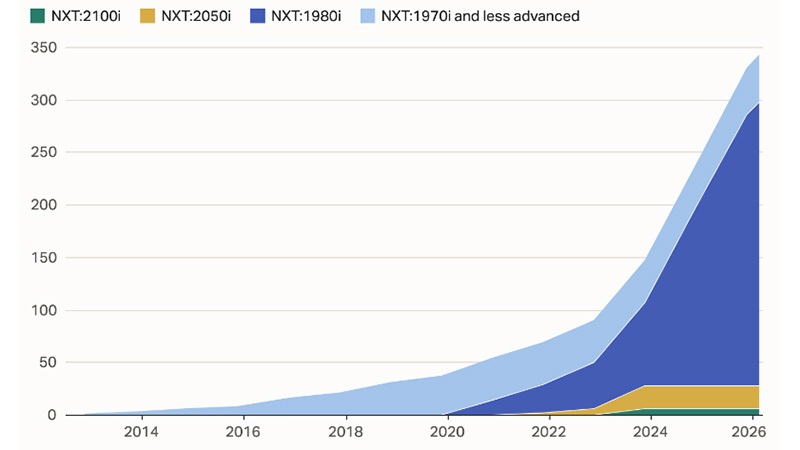
Chinese-owned fabs have accumulated more than 330 DUV immersion systems by early 2026, the report estimates. Continued imports could allow China to approach or surpass US and allied AI chip output under scenarios in which it prioritizes AI production.
The CTS describes itself as “a non-partisan policy research initiative” sponsored by the Institute for Progress. The report is authored by Nicholas Brown, a former senior policy advisor in the US Department of Commerce’s Bureau of Industry and Security, and Saif Khan, former director for technology and national security at the National Security Council.