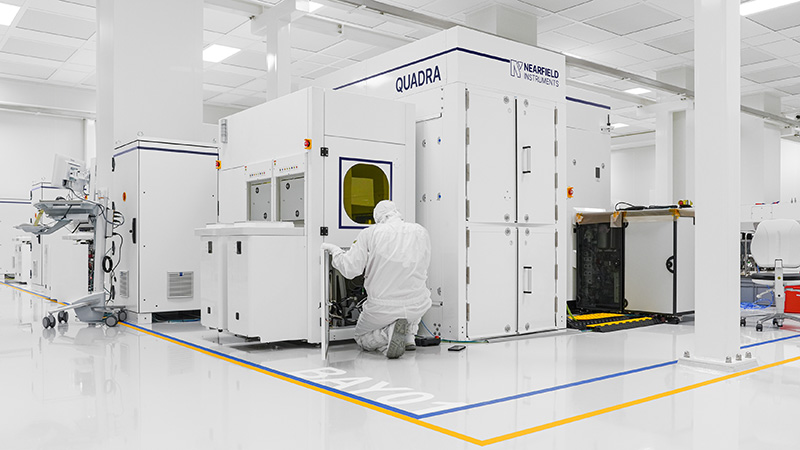
How does Hamed Sadeghian, the CEO of Nearfield Instruments, one of the most successful Dutch deep-tech players, view systems engineering? Bits&Chips asked him.
Hamed Sadeghian celebrated two occasions last week. He and his business partner Roland van Vliet recently raised 330 million euros, and they marked Nearfield Instruments’ 10th anniversary in their own distinctive way.
Through the way he manages his stakeholders, Sadeghian has taken on not only the profile of a leader, but, given his technical background, also that of a systems engineer or systems architect. In this second of two interviews with Bits&Chips, he explains that systems engineering is above all a discipline you learn through experience. Just as you don’t learn to ride a bike from a book, he says you don’t learn how to develop complex systems without making mistakes, taking risks and being closely involved in projects.
An important theme in the interview is the role of the customer. Sadeghian explains that a good systems architect must constantly listen to users, operators and engineers on the factory floor. He describes how he regularly visits customers himself, from the executive level down to the people who work with the systems on a daily basis. According to him, it’s precisely from conversations with those users that important improvements have emerged, for example to the user interface of Nearfield’s Quadra platform.
Sadeghian also shares a notable lesson he’s learned over the years: Always assume the customer is right. When a customer says a result isn’t correct, his first question isn’t why the customer is wrong, but what Nearfield might have overlooked. In his view, that attitude forms the foundation for successful collaboration and successful product development.
This interview can be watched on Youtube.