
Skip to content
Bits&Chips
×
×
Memberships
Advertising
Magazines
Videos
Contact

Log in

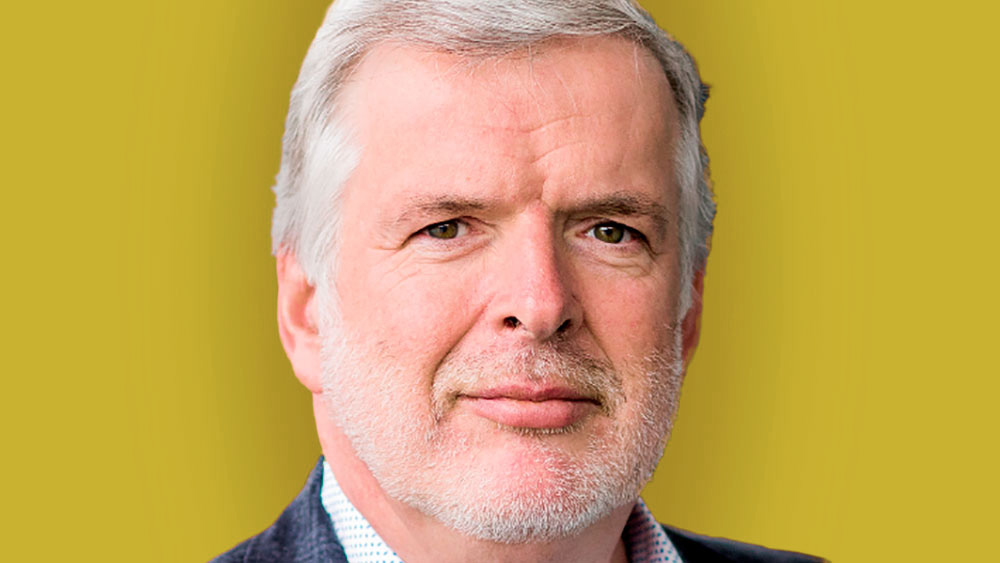
Peter de With is professor of video content analysis at Eindhoven University of Technology.

Opinion

Scaling the next barrier in molecular imaging for oncology needs updated trust mechanism

26 November 2025
Reading time: 3 minutes

As the first wave of AI-based solutions is reaching maturity, image-guided cancer treatment is moving toward the molecular level, observes Peter de With.

With the advent of deep learning and AI techniques in healthcare, the past decade has shown many developments in AI-based support of cancer treatment. Nowadays, the majority of this treatment depends on a form of imaging, such as the video-based endoscopic analysis of the esophagus, stomach and colon using endoscopy. Breast and prostate cancer are visualized with X-ray imaging and ultrasound.

For these cases, the imaging data have become of sufficiently high quality to enable detection and/or characterization of the disease. This setting is attractive for the deployment and application of computer-aided design-based support for the physician, where the CAD system helps in real-time detection of cancer and/or the classification during patient inspection.

In the VCA group at Eindhoven University of Technology’s EE Department, we’ve specialized in esophageal and colon cancer. In collaboration with the Amsterdam University Medical Centers and the Catharina Hospital Eindhoven, our research has matured into an efficient AI solution for embedded integration into endoscopy equipment and a small yet programmable add-on box. Since the benefit to physicians is undisputable, the research has piqued the interest of the medical equipment industry.

While this industry is working on enhancing the existing equipment with AI support, the research community is shifting focus to new barriers. An interesting path to consider is the growing success of new medical drugs for cancer disease control and containment. Such pharmacological treatment will benefit from even more precise imaging at the cell level.

For example, immunotherapy doesn’t attack the cancer itself but enhances the resistance of healthy cells and makes them stronger. Such therapy works best if a drug is delivered to the right place in the body, preferably without surgical intervention. Last spring, Holland Health approved a study called Foresight, spanning several sub-projects in this direction. At the TUE, our interest is obviously in improving the imaging technology here.

Drug molecules are usually much larger than other compounds in the human body. Such compounds can be imaged by high-quality MRI or even specialized forms of ultrasound. Hence, the breakthrough in ultra-high-resolution imaging of modern digital pathology scanners approaching the level of cells has to be further explored and expanded to arrive at imaging of large complex molecules and finding their locations in the human body.

The research is severely hampered by Dutch bureaucracy

This research is of world-class level (several participants have published in Nature and the like) but is severely hampered by Dutch bureaucracy. The research partners have to write extensive reports, make websites, keep track of budgets, have technical evaluation meetings and so on, without any form of reimbursement for their time. Not to mention the fact that after two (!) budget cuts ordered by The Hague, funding was more than halved from 20 million to 9 million euros.

To solve this motion of no confidence toward our Dutch top cancer researchers, I suggest a new way of working, which has already proved itself elsewhere. If Dutch top researchers reach world-class status without financial mistakes, they’re assigned a title like “chartered/trusted” scientist, similar to the chartered engineers in the United Kingdom. They would become a person of trust, so that they’re treated with the respect they deserve and can stand in for the people and projects they supervise without being subjected to the full extent of Dutch bureaucracy.

This new ‘knife’ will cut beneficially in two ways. First, it’s known that if you give trust to people, the good ones (ie the large majority) work harder, and with low bureaucracy, the efficiency and output will become higher. Secondly, faster progress in research will benefit the growing number of cancer patients all over the world.

There will be ample opportunity for spinoff companies and drug creation. Let’s see whether we can sustain or extend the strong position of the Netherlands for cancer treatment and related drugs in the near future.
Related content

Toward superset platforms

KU Leuven team streamlines spine surgery with dual robots and ultrasound

Top jobs
Salesforce Consultant
Werken bij STAR
Moerdijk
Events
Benelux RF&IC Conference
27 May 2026
Eindhoven
Courses
Headlines
  • Defense investor buys into TNO-UT spinoff Angard to counter drones with RF

    22 January 2026
  • ArcNL and Amolf boost chip metrology with directional light scattering

    22 January 2026
  • European Commission launches EU Inc to simplify cross-border growth

    21 January 2026
  • UT-led P4Q consortium launches to push industrialization of quantum photonics

    21 January 2026
  • Spinnov rises from the Bestronics ashes

    21 January 2026
  • Photondelta launches global €2M photonic chip design contest

    19 January 2026
  • ASM pre-announces Q4 bookings and revenue well ahead of guidance

    19 January 2026
  • Hengelo-based electronics specialist Sintecs joins VDL family

    15 January 2026
  • Chip market could grow or drop 12 percent in 2026, says Future Horizons

    15 January 2026
  • China’s chip industry uses 35 percent domestically sourced equipment

    14 January 2026
  • Gartner: Global semiconductor revenue surges 21 percent in 2025

    14 January 2026
  • Leydenjar takes silicon anodes to the US

    14 January 2026
  • Intel exudes optimism about 14A node

    12 January 2026
  • Itec chief Marcel Vugts moves to Trymax

    8 January 2026
  • Vitrealab raises $11M to push Quantum Light Chip for AR glasses

    7 January 2026
  • Delft’s Qualinx raises €20M to bring ultra-low-power GNSS chip to market

    6 January 2026
  • TSMC’s 2nm chips move into volume production

    5 January 2026
  • Sweden’s Alixlabs taps former ASML and Philips heavyweight Van der Poel

    5 January 2026
  • Dutch court to start hearing arguments in Nexperia case

    5 January 2026
  • ASM plots major expansion on Almere’s new High Tech Campus

    18 December 2025
Bits&Chips logo

Bits&Chips strengthens the high tech ecosystem in the Netherlands and Belgium and makes it healthier by supplying independent knowledge and information.

Bits&Chips focuses on news and trends in embedded systems, electronics, mechatronics and semiconductors. Our coverage revolves around the influence of technology.

Advertising
Subscribe
Events
Contact
High-Tech Systems Magazine (Dutch)
(c) Techwatch bv. All rights reserved. Techwatch reserves the rights to all information on this website (texts, images, videos, sounds), unless otherwise stated.
  • Memberships
  • Advertising
  • Videos
  • Contact
  • Search
Privacy settings

Bits&Chips uses technologies such as functional and analytical cookies to improve the user experience of the website. By consenting to the use of these technologies, we may capture (personal) data, unique identifiers, device and browser data, IP addresses, location data and browsing behavior. Want to know more about how we use your data? Please read our privacy statement.


Give permission or set your own preferences

Functional Always active
Functional cookies are necessary for the website to function properly. It is therefore not possible to reject or disable them.
Voorkeuren
De technische opslag of toegang is noodzakelijk voor het legitieme doel voorkeuren op te slaan die niet door de abonnee of gebruiker zijn aangevraagd.
Statistics
Analytical cookies are used to store statistical data. This data is stored and analyzed anonymously to map the use of the website. De technische opslag of toegang die uitsluitend wordt gebruikt voor anonieme statistische doeleinden. Zonder dagvaarding, vrijwillige naleving door je Internet Service Provider, of aanvullende gegevens van een derde partij, kan informatie die alleen voor dit doel wordt opgeslagen of opgehaald gewoonlijk niet worden gebruikt om je te identificeren.
Marketing
Technical storage or access is necessary to create user profiles for sending advertising or to track the user on a site or across sites for similar marketing purposes.
  • Manage options
  • Manage services
  • Manage {vendor_count} vendors
  • Read more about these purposes
View preferences
  • {title}
  • {title}
  • {title}

Your cart (items: 0)

Products in cart

Product Details Total
Subtotal €0.00
Taxes and discounts calculated at checkout.
View my cart
Go to checkout

Your cart is currently empty!

Start shopping