

Skip to content
Bits&Chips
×
×
About
Memberships
Advertising
Magazines
Videos
Contact

Log in

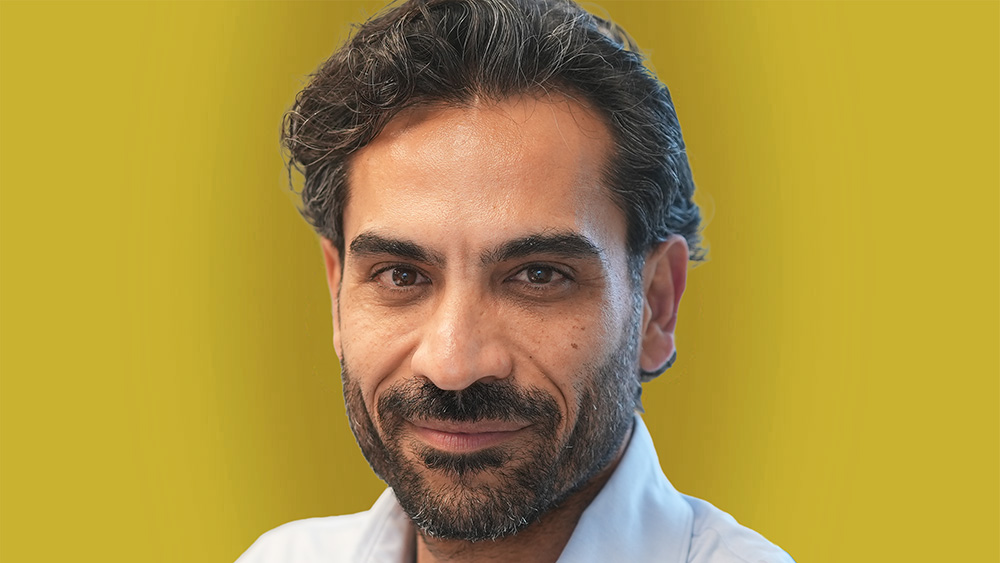
Martijn Heck is professor in photonic integration at Eindhoven University of Technology.

Opinion

Today’s AI business models are so 19th century

4 February 2026
Reading time: 3 minutes

The AI revolution isn’t being held back by energy, but by outdated thinking, argues Martijn Heck.

AI doesn’t have an energy problem. And no, I’m not referring to the fact that the trillions of euros invested in chips and data centers didn’t actually lead to operational facilities yet. I’m talking on a fundamental level. AI is leveraging the most advanced technology in the world: chips. This technology is improving by a factor of two every two years. We know this as Moore’s Law. And Moore’s Law isn’t dead. It’s bound to continue for the next two decades. The interesting part is that we also have Koomey’s Law, stating that energy use of computing goes down by at least a factor of two every two years. This means that AI and semicon technology can keep scaling exponentially, without any additional energy cost. None.

By 2030, energy consumption from AI data centers is expected to double compared to last year. That may sound dramatic. But consider this thought experiment: What if we launched ChatGPT-9 in 2031 instead of 2029? By simply delaying it two years, we wouldn’t double our AI energy footprint – we’d keep it steady. Some will argue that the economy urgently needs that extra boost in performance. But that’s a narrow view. By the same logic, if we look ahead over the next fifty years, we’d only need to slow performance growth by about 1.4 percent per year to avoid any increase in energy consumption. That’s a negligible difference. Greenpeace – and our new Dutch Prime Minister – can rest easy. Our AI systems would still grow exponentially in capability, just with a tiny bit more patience.

Unfortunately, we seem to have devolved to a 19th-century economic model, where we fall back on the archaic production factors of energy and capital. Cheap energy and an inflated monetary system enable a temporary boost in AI capacity. It’s not unlike a bunch of cavemen, going after each other with the largest club, in terms of sophistication.

This won’t scale. Unlike the number of transistors per chip, the number of data centers can’t scale exponentially. It’s a temporary boost, to gain market share. But is market share really that important when the very same data centers will be depreciated in three years, when a new generation of chips hits the market? Deepseek has shown that user commitment is rather volatile, so that seems unlikely.

Why this collective bubble-blowing? The 20th century wasn’t like that. When we think back on the rise of the semicon industry and the early internet in the 1990s, there was a feeling of technological progress. Of inventions. Of fine-tuning the most advanced industrial tools and processes to eventually establish the most advanced technology humanity has ever seen.

In the 21st century, we turned the internet into mostly a marketing tool, collecting and selling data, where global dominance is key. I think we can all agree that the business models of Booking.com, AirBNB, Uber and Justeattakeaway won’t deliver any Nobel Prizes for in-depth technology work. Most efforts focus on strengthening the position and pushing competition out.

Entrepreneurs, investors and politicians have a sole focus on perceived market share

Unfortunately, AI appears to follow a similar path. Entrepreneurs, investors and politicians have forgotten the value of technology and have a sole focus on perceived market share. And they think waving around a money wand is the best way to do that. AI is, in fact, a deep technology, uniquely enabled by chips and advanced algorithms. Is building extra data centers really the only solution for growth? Let me throw in some numbers: Tens of millions of people work in the global energy industry. Nvidia has only 36,000 employees, OpenAI only 5,000. How do people not see that investing in deep-tech talent and companies is by far the best way to avoid an energy crisis and to attain leadership in the field of AI?

Maybe we have to help the economy a bit. What if we allocate a maximum energy allowance per AI company, much like we allocate finite bandwidth to telecom providers? Would that not be a major stimulus for deep tech? Let’s put some intelligence in AI. Maybe some wisdom, too.

Related content

Will the Match Act trigger another ‘Greenland moment’ for the EU?

You can’t address AI’s risks by banning ASML’s exports

Top jobs
Your vacancy here?
View the possibilities
in the media kit
Events
Courses
Headlines
  • Global semiconductor market doubles in H1 2026

    11 August 2026
  • Samsung reportedly expects high-NA EUV insertion at 1nm node

    11 August 2026
  • Nanya set to become ASML’s newest EUV customer

    11 August 2026
  • Musk hints at free-electron laser EUV source tech for Terafab

    10 August 2026
  • Zeiss dismisses bottleneck concerns

    4 August 2026
  • SK Hynix raises annual chip investment to record $31B

    3 August 2026
  • Wafer fab equipment market heads for $220B by 2031

    3 August 2026
  • NXP explores acquisition of US edge AI firm Ambarella

    3 August 2026
  • Ampleon removes Chinese executives from daily management

    30 July 2026
  • ASML raises tool prices on soaring chip ASPs

    27 July 2026
  • TSMC raises 2026 capex to as much as $64B

    27 July 2026
  • ASIC design team spins out from Philips as ICwaves

    8 July 2026
  • Dutch defense embraces Intelic’s software-first drone interoperability approach

    8 July 2026
  • TNO and Destinus collaborate on radar seekers

    8 July 2026
  • Noviotech Campus sees another director go

    6 July 2026
  • UT appoints Gregor Halff as new executive board president

    6 July 2026
  • Reports: Semi equipment market to reach up to $250B in 2028

    1 July 2026
  • Japanese researcher proposes simpler high-NA EUV optics design

    25 June 2026
  • ASML partners with TNO on photonic chip pilot line

    24 June 2026
  • Dutch minister pushes back on US bid to tighten China chip controls

    24 June 2026
Bits&Chips logo

Bits&Chips strengthens the high tech ecosystem in the Netherlands and Belgium and makes it healthier by supplying independent knowledge and information.

Bits&Chips focuses on news and trends in embedded systems, electronics, mechatronics and semiconductors. Our coverage revolves around the influence of technology.

Advertising
Subscribe
Events
Contact
Follow us on
High-Tech Systems Magazine (Dutch)
(c) Techwatch bv. All rights reserved. Techwatch reserves the rights to all information on this website (texts, images, videos, sounds), unless otherwise stated.
  • About
  • Memberships
  • Advertising
  • Videos
  • Contact
  • Search
Privacy settings

Bits&Chips uses technologies such as functional and analytical cookies to improve the user experience of the website. By consenting to the use of these technologies, we may capture (personal) data, unique identifiers, device and browser data, IP addresses, location data and browsing behavior. Want to know more about how we use your data? Please read our privacy statement.


Give permission or set your own preferences

Functional Always active
Functional cookies are necessary for the website to function properly. It is therefore not possible to reject or disable them.
Voorkeuren
De technische opslag of toegang is noodzakelijk voor het legitieme doel voorkeuren op te slaan die niet door de abonnee of gebruiker zijn aangevraagd.
Statistics
Analytical cookies are used to store statistical data. This data is stored and analyzed anonymously to map the use of the website. De technische opslag of toegang die uitsluitend wordt gebruikt voor anonieme statistische doeleinden. Zonder dagvaarding, vrijwillige naleving door je Internet Service Provider, of aanvullende gegevens van een derde partij, kan informatie die alleen voor dit doel wordt opgeslagen of opgehaald gewoonlijk niet worden gebruikt om je te identificeren.
Marketing
Technical storage or access is necessary to create user profiles for sending advertising or to track the user on a site or across sites for similar marketing purposes.
  • Manage options
  • Manage services
  • Manage {vendor_count} vendors
  • Read more about these purposes
View preferences
  • {title}
  • {title}
  • {title}

Your cart (items: 0)

Products in cart

Product Details Total
Subtotal €0.00
Taxes and discounts calculated at checkout.
View my cart
Go to checkout

Your cart is currently empty!

Start shopping

Notifications