

Skip to content
Bits&Chips
×
×
About
Memberships
Advertising
Magazines
Videos
Contact

Log in

News

Delft-based Quantware steps up quantum scaling with 10K-qubit QPU

11 December 2025
Paul van Gerven
Editor at Bits&Chips
Reading time: 2 minutes

Quantware is leaping far ahead of the industry’s incremental progress with the impending introduction of a 10,000-qubit processor, positioning its VIO architecture as a potential new scaling standard in a field that has struggled to grow beyond a few hundred qubits.

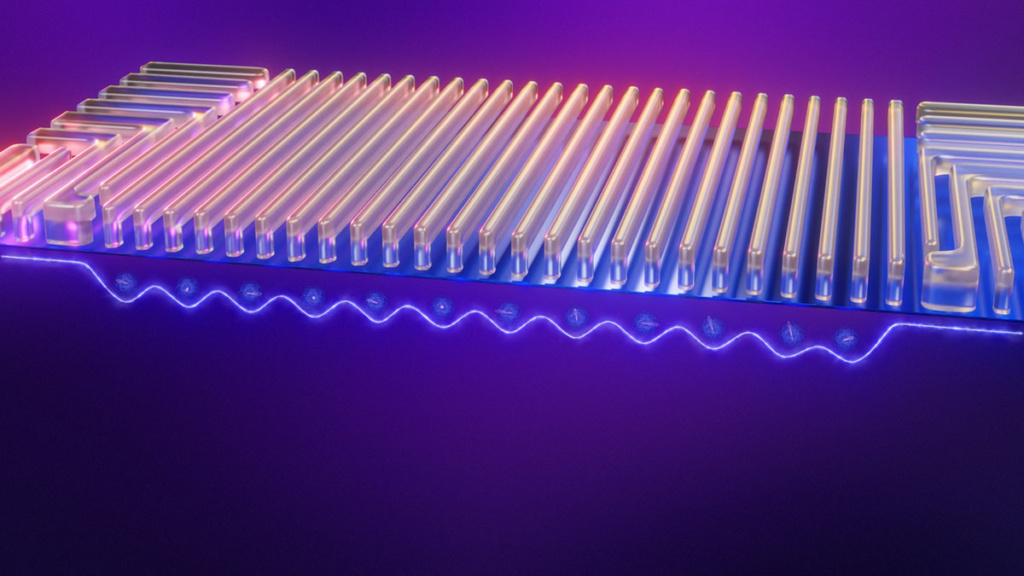
Quantware has announced a 10,000-qubit quantum processor unit (QPU), a massive step up from the 100-or-so-qubit offerings currently considered state-of-the-art. Built on the startups’ proprietary VIO 3D chiplet architecture, the launch marks a significant shift in scalability.

For quantum computers to reach their full potential, experts estimate that a million or more qubits are needed. At the current scaling pace, it would take decades before that number is reached. Google’s quantum chips went from 53 to 105 qubits in six years and IBM recently unveiled a 120-qubit QPU that will be the leading device size in 2028, according to its latest roadmap.

Credit: Quantware

Delft-based Quantware sidesteps this problem by enabling up to 40,000 input–output lines through ultra-high-fidelity chip-to-chip connections between modular chiplets. This VIO-40K technology removes the need for complex multi-QPU networking, which has inflated system costs and limited performance.

“For years, people have heard about quantum computing’s potential to transform fields from chemistry to materials to energy, but the industry has been stuck at 100-qubit QPUs, forcing the field to theorize about interesting but far-off technologies. Quantware’s VIO finally removes this scaling barrier, paving the way for economically relevant quantum computers,” says Quantware CEO Matt Rijlaarsdam.

Quantware is positioning VIO as an open standard for scalable quantum hardware, compatible with any superconducting qubit design. The VIO-40K ecosystem already includes Nvidia’s NVQLink platform, allowing low-latency integration with classical AI infrastructure via Cuda-Q, bridging the gap between quantum and classical computing environments.

To support production, Quantware also announced Kilofab, a dedicated QPU foundry set to open in 2026 at its Delft headquarters. The facility will scale production capacity twentyfold and focus on Quantum Open Architecture (QOA) devices. The first VIO-40K units are expected to ship in 2028.

Related content

Quantware lands record €152M to scale quantum processor production

Intel’s quantum computing push builds on Delft research

Top jobs
Events
Courses
Headlines
  • Imec partners with Belgian Defense for military technology development

    2 November 2026
  • Demcon targets photonics assembly bottleneck with laser-written connections

    2 November 2026
  • Sandgrain appoints Jan Jager as CEO

    2 November 2026
  • Olaf van der Sluis takes helm of TUE’s Casimir Institute

    2 November 2026
  • Samsung’s 2026 capex surges to $59B

    29 October 2026
  • NXP upbeat on software-defined vehicles outlook

    29 October 2026
  • ASM to meet 2030 revenue target three years early

    28 October 2026
  • Netherlands commits over €300M to boost medtech

    27 October 2026
  • Photonfirst and Naval Group to test fiber-optic sensors on naval vessels

    27 October 2026
  • Flemish millions for defense growth with space tech

    27 October 2026
  • Applied Materials to raise Besi stake to approximately 20 percent

    27 October 2026
  • Nexperia reports further growth as it expands production outside China

    27 October 2026
  • Summit in Delft addresses Europe’s shortage of systems thinkers

    26 October 2026
  • Micron rules out 4F² DRAM in favor of continued scaling and 3D transition

    22 October 2026
  • Nvidia moves optical engines onto interposer

    22 October 2026
  • Melexis selects Neways for pressure sensor packaging

    22 October 2026
  • Amsterdam quantum venture wins Photondelta contest with chip-based atomic clock

    21 October 2026
  • Photon Bridge raises €10M to scale lasers for AI interconnects

    21 October 2026
  • Intel pitches 300mm silicon photonics with integrated InP lasers

    20 October 2026
  • New Origin photonics fab clears power and water hurdles

    20 October 2026
Bits&Chips logo

Bits&Chips strengthens the high tech ecosystem in the Netherlands and Belgium and makes it healthier by supplying independent knowledge and information.

Bits&Chips focuses on news and trends in embedded systems, electronics, mechatronics and semiconductors. Our coverage revolves around the influence of technology.

Advertising
Subscribe
Events
Contact
Follow us on
High-Tech Systems Magazine (Dutch)
(c) Techwatch bv. All rights reserved. Techwatch reserves the rights to all information on this website (texts, images, videos, sounds), unless otherwise stated.
  • About
  • Memberships
  • Advertising
  • Videos
  • Contact
  • Search
Privacy settings

Bits&Chips uses technologies such as functional and analytical cookies to improve the user experience of the website. By consenting to the use of these technologies, we may capture (personal) data, unique identifiers, device and browser data, IP addresses, location data and browsing behavior. Want to know more about how we use your data? Please read our privacy statement.


Give permission or set your own preferences

Functional Always active
Functional cookies are necessary for the website to function properly. It is therefore not possible to reject or disable them.
Voorkeuren
De technische opslag of toegang is noodzakelijk voor het legitieme doel voorkeuren op te slaan die niet door de abonnee of gebruiker zijn aangevraagd.
Statistics
Analytical cookies are used to store statistical data. This data is stored and analyzed anonymously to map the use of the website. De technische opslag of toegang die uitsluitend wordt gebruikt voor anonieme statistische doeleinden. Zonder dagvaarding, vrijwillige naleving door je Internet Service Provider, of aanvullende gegevens van een derde partij, kan informatie die alleen voor dit doel wordt opgeslagen of opgehaald gewoonlijk niet worden gebruikt om je te identificeren.
Marketing
Technical storage or access is necessary to create user profiles for sending advertising or to track the user on a site or across sites for similar marketing purposes.
  • Manage options
  • Manage services
  • Manage {vendor_count} vendors
  • Read more about these purposes
View preferences
  • {title}
  • {title}
  • {title}