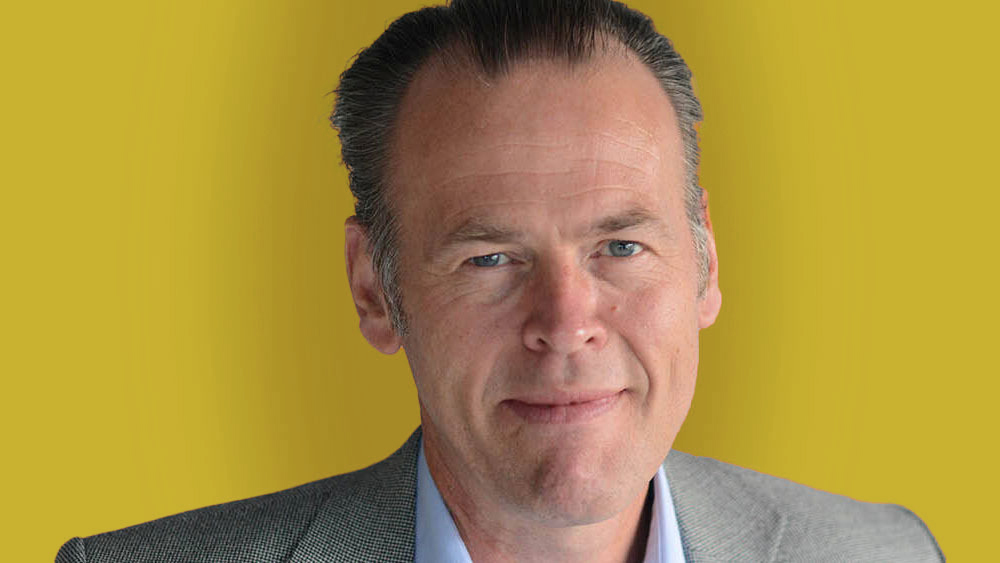
Jan Bosch believes we’ve barely started to scratch the surface of what technology will bring to humanity.
When I was young, I remember that my grandmother would often complain about things changing faster and that it was hard for her to keep up. At that point, I thought that this was because she was old, which she was, but these days, I know she was right. If we look at the societal adoption of new technologies, we can see a continuous acceleration. It took the automobile 62 years to reach 50 million users and the telephone, introduced a bit later, 50 years. Credit cards and televisions were significantly faster, with 22 and 18 years, respectively. More recently, things have gone even faster, with Tiktok reaching 100 million users in nine months and ChatGPT reaching the same number in less than two months.
In his book “The singularity is near” from 2005, Ray Kurzweil discusses this acceleration and attributes it to the exponential growth in a number of key technologies, including computers, genetics, nanotechnology, robotics and artificial intelligence. In his view, we hit the singularity when machine intelligence reaches a point where it’s more intelligent than all humans combined. At that point, the rate of technological progress will accelerate even faster as it’s no longer limited by human constraints.
That view easily creates a perspective of humans left behind in the dust as artificial intelligence takes off and creates a world to serve itself and where we, if we’re lucky, are kept as pets. However, that’s not at all how I view the future. If we look at the history of humankind, the best way to describe us is as tool builders. Starting from the spear and bow and arrow for hunting to the plow and the harness for a horse, human history is shaped by the tools we invent.
In some way, many of us view anything ‘natural’ as superior to human-made and tend to prioritize our buying decisions that way. So, we prefer to buy ecological vegetables, even though it takes significantly more land to grow them. We prefer to buy green electricity, even if wind power kills numerous birds and insects and solar has such an irregular power generation pattern that many countries have to keep heavily polluting power stations, like coal power plants, going for the times when the sun doesn’t shine. To be clear, I’m not at all against these things, but we should be aware of the downsides of the choices we make.
When we reflect on our preference toward ‘natural,’ it’s obvious that this is highly selective. Try cooking a meal over a wood fire instead of the stove in your kitchen. Or reading a book next to a candle instead of LED lights. Try to memorize all the contact information of the people you interact with regularly without using your phone or computer. We’re a tool-building species that continuously uses technology to improve our lives and the acceleration of technological progress is great for humankind.
Of course, with every new technology, there’s a risk of negative effects. The bow and arrow weren’t only used to hunt but also to kill other humans. AI-driven face recognition isn’t only used to unlock your phone but also to discriminate against minorities and create oppressive surveillance states. It’s the role of governments to protect us against unnecessary downsides while it’s the role of companies to introduce these new technologies and provide the associated benefits to society.
One concern I’ve shared before is that in the balance between caution and creating the benefits of new technologies, I fear that especially in Europe, although we can see several signs elsewhere as well, we’re leaning way too far on the side of caution. The regulatory pressure from the EU and national governments experienced by many companies is stifling innovation as it leads to highly risk-averse behavior in these companies due to the downside risks, such as fines of up to 10 percent of their revenue. Also, it makes products and services more expensive due to the high cost of continuously ensuring compliance.
Although I sometimes feel like a broken record, I fear that many who lean toward caution are ignoring the downsides of slowing down the introduction of new technologies. My go-to example is the more than one million people who die in traffic accidents every year, a number we could significantly reduce with the broad rollout of autonomous vehicles. But there are numerous examples. What about all the people who will die of cancer because we didn’t use an AI model to evaluate their medical images for abnormalities missed by humans? Or what about all the disadvantaged children who didn’t get an AI agent acting as a personalized teacher? There are significant downsides to not introducing new technologies into society and those need to be balanced more explicitly with the risks such introductions bring.
Many fear technology will replace humans but fail to realize that we’re all cyborgs already. If you wear glasses, have had a hip or knee replaced or use a mobile phone or computer, you’re a cyborg by the original definition of the term. We’re shaping new technologies, then merge with them and end up being shaped by them. This trend has been going on for millennia and will continue for, hopefully, millennia more.
All these new technologies, of course, lead to changes and disruptions in society. People will lose their jobs and will have to find new ones, potentially needing to re-educate themselves to stay relevant in the job market. Again, this has been going on for the entire history of humankind. From the hunter-gatherer to agricultural societies onward, change and disruption have been the essence of our existence. But typically, it resulted in a better life for us as a species.
There have been and still are enormous amounts of suffering in the world. Technology has made a lot of unavoidable suffering avoidable. Curing diseases, preventing them through vaccines and eradicating them, like smallpox, are driven by technology. Science and technology first make the unavoidable avoidable and then we need engineering and commercialization to give everyone access to these technologies. I’m a techno-optimist not because I’m some naive butterfly, but because wherever I look, I see technology improving our lives. And I want more of that, not less! Although some believe that we’ve reached the pinnacle of our civilization, I believe that we’ve barely started to scratch the surface of what technology will bring to humanity and I’ll do everything I can to accelerate the adoption of technology so that we can all enjoy its benefits. To end with a quote by Brian Tracy: “Optimism is the one quality more associated with success and happiness than any other.”