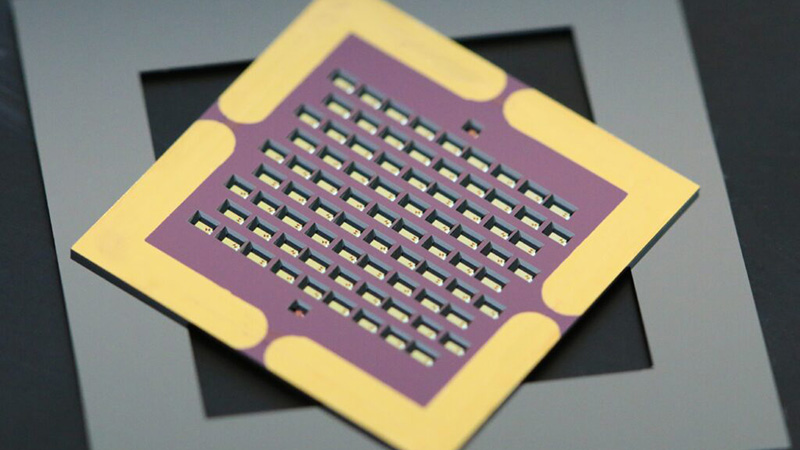
A Dutch photonic sensor designed to detect molecular signatures of life is set for a test in orbit. Delft University of Technology will fly the silicon nitride (SiN) photonic integrated circuit, developed by Enschede-based Lionix International, aboard a Pocketqube satellite as part of the Life Marker Chip for Origin of Life (LMCOOL) program. The launch is scheduled for early 2027 and is intended to raise the technology readiness level of the sensing platform for future space missions.
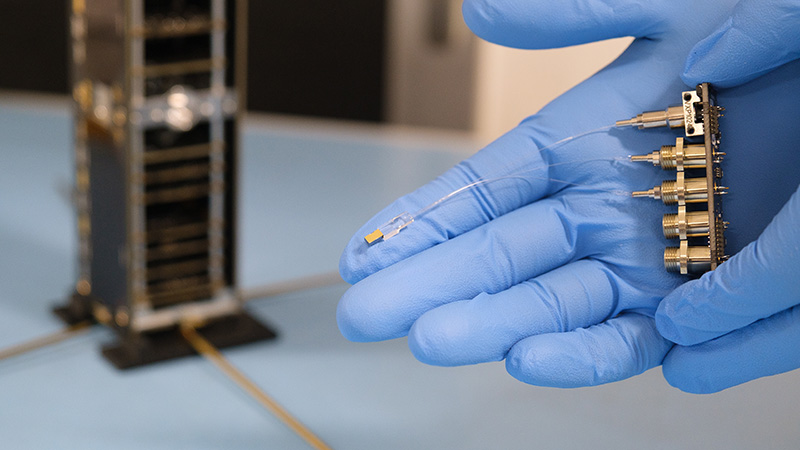
The mission combines expertise from two TU Delft teams: the Delfi program, which develops miniature satellites, and researchers working on photonic sensing technology for astrobiology. At the heart of the payload is Prism, a refractive index sensing module. The chip is designed to detect molecules such as amino acids by measuring minute changes in the refractive index of liquids, forming a core building block of future instruments that could search for signs of life on ocean exoplanets, such as Saturn’s moon Enceladus.
Prism is based on Triplex, Lionix’s proprietary SiN photonic integrated circuit platform, which combines low optical losses with a broad operating wavelength range. The roots of the chip to be sent into space trace back to the life marker chip developed by Lionix two decades ago for ESA’s Exomars program, but it has also found terrestrial applications. For example, Surfix uses the technology for biomedical diagnostics.