The success of a university education is now measured in graduation rates rather than intellectual formation, observes Stefano Stramigioli, a professor at the University of Twente. He knows why. The primacy of academic education no longer rests with academics themselves.
If universities were car factories, they would be producing BMWs, Audis and the occasional Ferrari. There’s nothing wrong with a Fiat Panda or a Hyundai, but other factories can build those. It’s the natural mission of a university to operate at the top end, where boundaries are being explored and pushed forward.
That may sound uncontroversial. Yet, to his dismay, UT’s Stefano Stramigioli sees the paint peeling from academia’s ideals. Educational standards are slipping, he argues, and the technical sciences aren’t exempt. Worse still, this decline isn’t the unintended consequence of well-meaning policies gone awry; it’s the result of deliberate choices. Universities, he says, are knowingly opting to manufacture Volkswagen Polos.
“Decisions are being made with quantity in mind, not quality,” Stramigioli contends. He traces the trend to a deeper structural shift: Authority within universities has moved away from academic staff to administrators who aren’t directly involved in teaching or research. “Administrators and support services are supposed to facilitate the primary process. Now, it’s the other way around, and that’s disastrous for quality. We must educate thinkers, not monkeys who know tricks.”
MIT
Aged 57, Stramigioli grew up and studied in Italy, worked for six years in Delft and moved nearly three decades ago to the University of Twente. An internationally recognized systems theorist and robotics researcher, he’s an IEEE Fellow and recipient of a prestigious ERC grant.
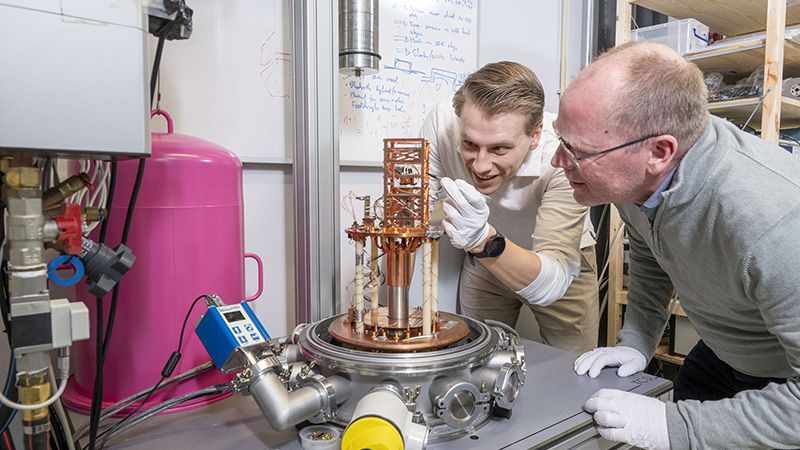
The erosion of academic standards visibly weighs heavily on Stramigioli. A little despondent during the interview, he shifts his demeanor as he gives his visitor a tour past the robotic setups and experimental platforms in his laboratories. His eyes light up as he describes his research with palpable enthusiasm.
Stramigioli hasn’t just thought about the practical dimensions of the issue. In conversation, he invokes towering figures from philosophy, chief among them Wilhelm von Humboldt, the intellectual architect of academic freedom. Von Humboldt argued that universities must operate independently from government and other external forces. Academic staff should govern themselves and determine both how they teach and what they research. The link between research and teaching, a cornerstone of modern universities, also traces back to him. “Von Humboldt understood that those who teach and conduct research know best what’s required. You must trust them. That trust is now gone.”
Consider the Basic Teaching Qualification (BKO in Dutch), the mandatory certification for university lecturers in the Netherlands. “I completely agree that education standards must be high,” Stramigioli stresses. “But the way this is implemented is absurd. People who have never taught at an academic level are telling me how to teach my subject.”
“I know how to teach robotics. That’s not arrogance. It’s a fact.” Yet, he’s still required to file reports and demonstrate compliance with predetermined pedagogical frameworks. “The BKO is a bureaucratic farce. Window dressing.” Stramigioli has never participated. “I teach with passion, knowledge and love. I don’t have time for that nonsense. Fire me, I say. But then you lose everything I contribute to the organization.” Obviously, Stramigioli was never dismissed.
A colleague with an impressive international teaching reputation was also required to complete the certification process. “At MIT, they tell students: take this man’s online course. And here, we say: you need a certificate. What are we doing?”
Lowering the bar
The paternalism is bad enough, Stramigioli says, but he sees its effects trickle down into the classroom. “Standards are going down. I see it everywhere.” Early in his career at Delft University of Technology, he took over a course and raised the bar. In the first year, only a third of the students passed. He was summoned by the education office. “They looked only at the numbers, not the content.”
Students who took the class defended him before the committee. “They said: we wish more courses were like this.” He changed nothing. The following year, two-thirds passed and he won a teaching award. “If you make it easier, three-quarters pass and no one complains. But if you keep the level high and students have to work harder, you’re called to hold yourself accountable.”
He lays much of the blame on the funding model, under which universities receive money per graduate. “One hundred percent. No doubt about it.”
With a long track record and an international reputation, Stramigioli can afford to push back. Not everyone can. “If you’re just starting out, your career depends on evaluations. So, you adapt. And that usually means lowering the bar.”

ChatGPT
Stramigioli is equally critical of what he calls the massification of higher education. “The university represents the highest level of education. Not everyone needs to be there.” This, he stresses, isn’t a value judgment about people. “Different levels serve different purposes. Universities of applied sciences are tremendously valuable. But academic education has a different mission.”
He takes issue with the bachelor-master structure, which he sees as a lazy copy of the Anglo-Saxon model. During his first two years as a student in Bologna, he studied nothing but mathematics and physics, as did all science students. It formed the foundation of a five-year degree without an interim diploma. “Now, you must earn a bachelor’s degree in electrical engineering in three years. Naturally, there’s less time for fundamentals.”
In the age of artificial intelligence, he believes that’s disastrous. “AI takes a lot of work off our hands. I use it myself. But that’s precisely why we must teach university students more than ever the core academic skills: critical and analytical thinking, abstraction and deep mastery of our most important tool, mathematics. You don’t need a university education to learn how to type prompts into ChatGPT.”
Meanwhile, top students suffer as standards erode. “I have a group of six students who voluntarily come every week for deeper study beyond the curriculum. They’re underserved because the overall level is set by the average. That holds back the best.”
Cum laude
During the interview, Stramigioli recounts examples from daily practice that illustrate how he feels his autonomy has been curtailed. He prefers not to see them in print, noting that the issue isn’t unique to Twente but nationwide.
To reverse course, he argues for a revival of the Humboldtian model. “Administrators must become enablers again. Their role is to make the primary process possible.” In a modern variation, the academic community could form a kind of parliament, with voting rights for professors and elected representatives, while the board would function as the executive branch. “A government must have the support of parliament to implement decisions. In Italy, there’s still an academic senate. In Germany, professors’ positions are far stronger.”
Yet, he sees the Netherlands drifting further in the opposite direction and, as a result, a certain wariness has crept in. Directives from above and bureaucratic entanglements take their toll. “It’s denigrating and demotivating. It drains the joy from the work.”
“I am, of course, a scientist to my core. I’ll remain one until my last breath.” But his relationship with the institution has changed. When the University of Twente recently decided – without consulting its professors – to abolish the distinction of cum laude, something snapped. “If I receive another ERC grant, will the most ambitious students come to Twente to work with me, or choose another university where they can graduate cum laude if they work hard enough? If I were still a student, I’d choose the latter. So, I have to ask myself whether I should carry out a second ERC here in Twente.”
Top image credit: University of Twente