Nikon believes it can regain ground in the argon fluoride (ArF) lithography market. In an interview with Nikkei, CEO Yasuhiro Ohmura hailed semicon litho as a key driving force for his firm to return to growth. In a management plan presented in early May, Nikon targets 55-percent revenue growth for the precision business (which also includes FPD lithography and metrology systems) on a company-wide goal of a 35-percent revenue increase.
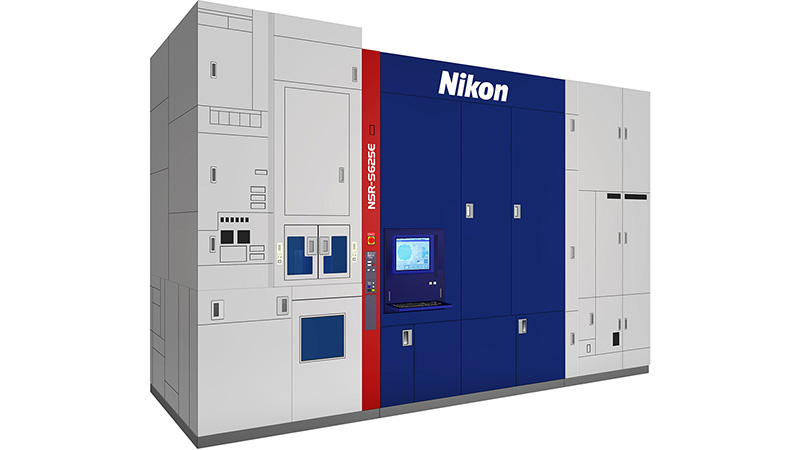
Once a fierce competitor of ASML, Nikon’s litho market share has steadily eroded in the 2010s. In fiscal year 2026, the precision equipment division posted sales of 167.2 billion yen (about 900 million euros), a decline of 17 percent year-on-year. The Japanese firm sold three dry ArF and no immersion ArF scanners in 2026, according to company data.
Ohmura said that ongoing talks with major chipmakers are about to bear fruit, stating that “purchase orders are nearing.” He touted lower prices than his competitor. “We manufacture many parts in-house, giving us an advantage in cost competition,” he explained.
The sticker price of lithography equipment is only one consideration for chipmakers, however. A set of specifications, including throughput, availability and uptime and overlay accuracy, all factor into purchasing decisions. Even if Nikon were able to offer a tool as good as or better than ASML at a lower price, it would still have to demonstrate compatibility with the market leader’s systems. One tough nut to crack, for example, is to align on layers that were printed on an ASML machine.