
Skip to content
Bits&Chips
×
×
About
Memberships
Advertising
Magazines
Videos
Contact

Log in

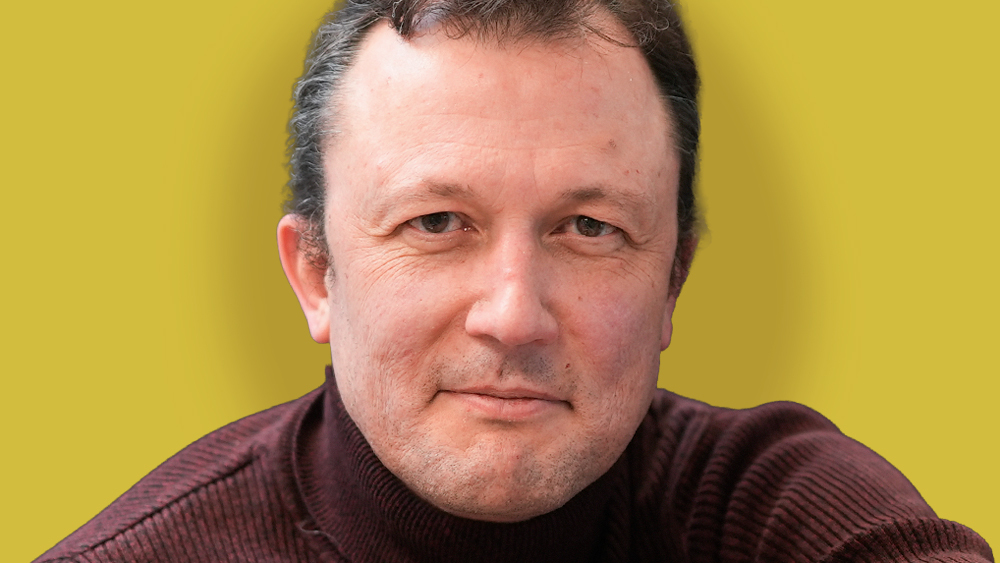
Martijn Heck is professor in photonic integration at Eindhoven University of Technology.

Opinion

Academic activism isn’t impact

23 September 2026
Reading time: 3 minutes

Academics are increasingly expected to demonstrate impact by championing causes, policies and technologies. But academia serves society better by remaining a critical and independent source of evidence, argues Martijn Heck.

Last month saw the tragic conclusion of the much-hyped story around Jason Arday. He was a poster-child professor at Cambridge, young and black, in the field of race, inequality and education. He was accused of plagiarism by Nathan Cofnas, a not-so-well-established-yet academic, with the view that humanity can be divided into various races with different levels of intelligence. That accusation was front-page news all over the world. And it led to Arday’s death.

Plagiarism and fraud in academia are pretty common, unfortunately, and we deal with that. Going to the media isn’t the way. Mostly because nobody outside academia actually cares. So, why did this story blow up? Because this wasn’t about academics. This was about activists. Doubt was easily raised about academic quality, as Arday was black himself and an activist for equal rights, the very topic of his research. Likewise, nobody believes that Cofnas was just guarding academic standards, given his public profile. He wouldn’t have gone after a tweed-wearing Tolkien lookalike.

This story lays bare the inconvenient relation between academia and activism. Academics and their research become vulnerable when there’s a seed of doubt. Were the researchers objective when they obtained results confirming their ideals? I still trust the system of peer review and the scientific method, maybe naively. But will the general public have that faith? Or worse: Will researchers maybe bury results that go against their beliefs? Do we think – hypothetically! – a feminist researcher will publish results showing that women are less suitable as boardroom executives? That a ‘woke’ researcher will show that slavery had no impact on current society? Or that Cofnas will publish that black people are smarter than white people? And to broaden it a bit, will a climate activist publish evidence that the earth isn’t actually warming up?

The choice to act is made by society, not by professors

Funding agencies, policy makers and media increasingly expect academics to engage with the public and take positions in the debate. I disagree with that trend. For example, I don’t think that climate scientists should call for reducing emissions. They can explain and prove that emissions lead to global warming. But the choice to act is made by society, not by professors. I think academia weakens its credibility by choosing sides. It needs to stay rational. A neutral point of reference for all sides in the debate. That’s impossible if it’s a side itself.

Technology isn’t really affected by this kind of societal activism. However, it’s extremely important for our economy, which means money is at stake. Billions of euros are being invested in Dutch National Growth Fund projects and in the European Chips Act, to name a few. This means that the engineering sciences have similar dilemmas: Should a professor push his field and inflate the impact to raise budgets? Or should they give a balanced and realistic overview of where the technology is heading?

This question is opportune. I’ve heard the pitches: Optical chips will replace electronic chips, quantum computers will soon break encryption and Europe will have 20 percent of global chip manufacturing. These work to attract attention and get the balls rolling, but they need to be followed up with nuance, not with hype. And that should be the role of academia.

Many don’t like this reality check. They feel it’s a negative attitude, maybe fearing their bubble gets popped. That’s naïve and counterproductive. Academia isn’t working in isolation, and – if executed well – is the canary in the coal mine for future directions of the field. These opportunities will be missed if we close our eyes to this. Optical chips won’t replace electronic chips, but they’re definitely merging into heterogeneous packages for AI processors, as Nvidia has shown. The quantum computer is still far off, but quantum sensing is already a commercial reality. And getting back market share from TSMC might not happen for Europe, but what about building critical strengths in niche technologies, like compound semiconductors?

Academia should play its role in rationally and objectively assessing future technologies and trends. It’s its strength. It shouldn’t be cheerleading hyped narratives. Not be negative, but spot the opportunities and steer accordingly with thought leadership.
Related content

Machines that think: the factory floor

“You need to understand where the limits of different actuators lie”

Top jobs
Events
Courses
Headlines
  • ABP commits €1B to European tech scaleups

    24 September 2026
  • Americans scale silicon anode technology in Dutch demo plant

    23 September 2026
  • IC-Link joins TSMC cloud alliance for advanced-node chip design

    23 September 2026
  • Dutch and German innovation agencies put €40M into AI chip design

    23 September 2026
  • Morphotonics bags €40M to focus on waveguides for smart glasses

    23 September 2026
  • Smart Photonics and Globalfoundries launch joint photonics foundry service

    22 September 2026
  • TNO looks to double photonic chip pilot capacity

    21 September 2026
  • Nexperia taps Tata Electronics for chip manufacturing in India

    18 September 2026
  • Cabinet earmarks billions to revive Dutch innovation agenda

    17 September 2026
  • Delft sees 6G test tower go live at 600 MHz

    16 September 2026
  • Euclyd raises over €200M to build AI infrastructure platform

    15 September 2026
  • Tracxon lands another €1M for printing flexible hybrid electronics

    14 September 2026
  • Fortaegis secures $50M to commercialize Secure Compute platform

    14 September 2026
  • TU Delft to test Lionix’s life-detecting photonic chip in space

    10 September 2026
  • ASML joins Xanadu to cut optical losses in photonic quantum chips

    10 September 2026
  • IonQ puts quantum threat to Bitcoin on its 2028 roadmap

    9 September 2026
  • TUE showcases edge AI chip design to cut energy use

    9 September 2026
  • Samsung to deploy high-NA in DRAM production in 2028

    8 September 2026
  • Imec pushes CAR resists to 22nm pitch with high-NA EUV

    8 September 2026
  • Former Belgan executive detained in Chinese espionage probe

    8 September 2026
Bits&Chips logo

Bits&Chips strengthens the high tech ecosystem in the Netherlands and Belgium and makes it healthier by supplying independent knowledge and information.

Bits&Chips focuses on news and trends in embedded systems, electronics, mechatronics and semiconductors. Our coverage revolves around the influence of technology.

Advertising
Subscribe
Events
Contact
Follow us on
High-Tech Systems Magazine (Dutch)
(c) Techwatch bv. All rights reserved. Techwatch reserves the rights to all information on this website (texts, images, videos, sounds), unless otherwise stated.
  • About
  • Memberships
  • Advertising
  • Videos
  • Contact
  • Search
Privacy settings

Bits&Chips uses technologies such as functional and analytical cookies to improve the user experience of the website. By consenting to the use of these technologies, we may capture (personal) data, unique identifiers, device and browser data, IP addresses, location data and browsing behavior. Want to know more about how we use your data? Please read our privacy statement.


Give permission or set your own preferences

Functional Always active
Functional cookies are necessary for the website to function properly. It is therefore not possible to reject or disable them.
Voorkeuren
De technische opslag of toegang is noodzakelijk voor het legitieme doel voorkeuren op te slaan die niet door de abonnee of gebruiker zijn aangevraagd.
Statistics
Analytical cookies are used to store statistical data. This data is stored and analyzed anonymously to map the use of the website. De technische opslag of toegang die uitsluitend wordt gebruikt voor anonieme statistische doeleinden. Zonder dagvaarding, vrijwillige naleving door je Internet Service Provider, of aanvullende gegevens van een derde partij, kan informatie die alleen voor dit doel wordt opgeslagen of opgehaald gewoonlijk niet worden gebruikt om je te identificeren.
Marketing
Technical storage or access is necessary to create user profiles for sending advertising or to track the user on a site or across sites for similar marketing purposes.
  • Manage options
  • Manage services
  • Manage {vendor_count} vendors
  • Read more about these purposes
View preferences
  • {title}
  • {title}
  • {title}

Your cart (items: 0)

Products in cart

Product Details Total
Subtotal €0.00
Taxes and discounts calculated at checkout.
View my cart
Go to checkout

Your cart is currently empty!

Start shopping

Notifications