Intel dialed back expectations for a pullback in 2026 capital spending, instead outlining a plan that keeps overall capex roughly “flat to down slightly” while increasing spending on manufacturing tools. The chipmaker also confirmed that high-NA EUV lithography will be deployed in its upcoming 14A process.
During the earnings call discussing Q4 2025 results, CFO David Zinsner said that Intel will be spending “a lot less in space,” ie cleanroom expansions, and will be devoting “more of our dollars to tools. We are ramping up tool spending quite a bit.” The spending will be weighted towards the first half of the year and is aimed at supporting demand in 2027 and beyond. Intel’s capex last year came in at about 18 billion dollars.

Intel revealed that it’s experiencing supply constraints, as demand for data center CPUs and AI-related infrastructure outpaces what its manufacturing network can currently deliver. Management said it’s currently shipping “hand to mouth” from its fabs, with gradual improvement expected beginning in the second quarter as tool additions, throughput gains and yield improvements translate into higher supply.
Despite the higher tool spend, Intel emphasized continued capital discipline. Management reiterated that major capacity investments for future nodes will remain gated by external foundry customer commitments. Until those commitments are secured, spending on 14A will be limited to technology development and R&D rather than full-scale capacity buildout. CEO Lip-Bu Tan said that “engagements with potential external customers on 14A are active.” He expects them to make a decision in the second half of the year.
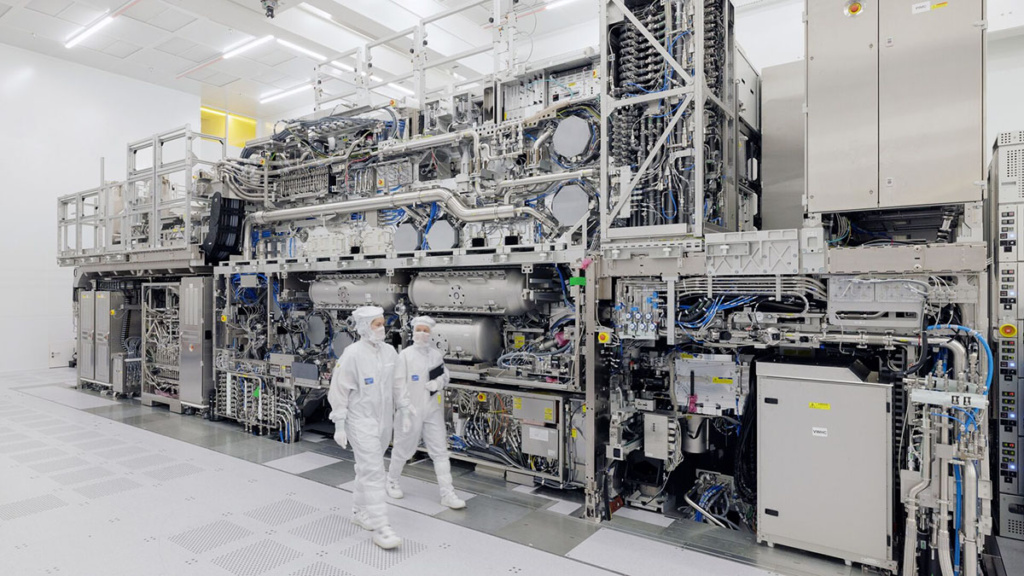
Separately, Intel and ASML have “demonstrated technical viability” of high-NA EUV in “delivering improved accuracy and productivity.” Zinsner said high-NA “will be part of our 14A process. Of course, there will be different variants of 14A, but High NA is targeted at 14A.”