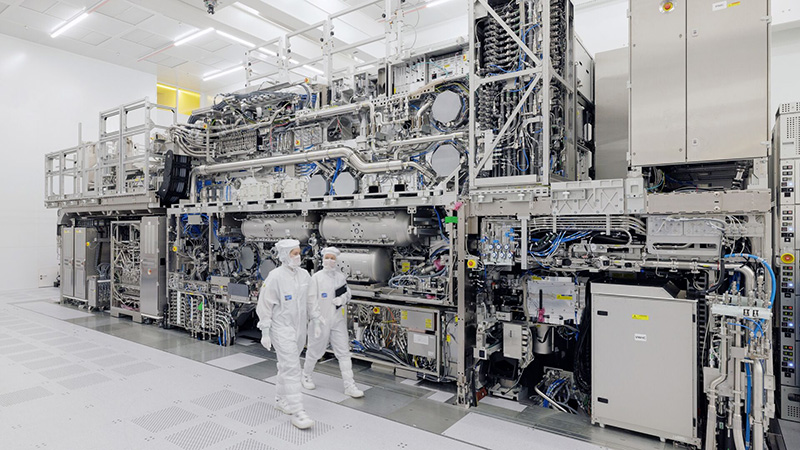
TSMC has increased its 2026 capital expenditure budget to 60-64 billion dollars, up from the previously indicated 52-56 billion dollars, citing stronger-than-expected structural demand for AI and high-performance computing. The company said 70 to 80 percent of spending will go toward leading-edge process technologies, with another 10 to 20 percent earmarked for advanced packaging, testing, mask-making and related capacity.
During the Q2 earnings call with analysts, management stressed that the higher investment reflects long-term customer commitments rather than a cyclical surge. CEO CC Wei said the company continues to receive increasingly strong demand signals from both direct customers and cloud service providers, prompting a higher investment pace. He added that the company now expects AI-related semiconductor demand to grow faster than the mid- to high-50 percent five-year CAGR outlined earlier this year, but stopped short of providing a revised target.
In line with the elevated growth prospects, TSMC’s capital expenditure will grow beyond previous projections. Having previously said that capex over the next three years would be “significantly higher” compared to the three years prior, CFO Wendell Huang confirmed capex over the next three years will be “even higher.”

Management rejected suggestions that the AI infrastructure build-out is turning into a bubble. Wei stressed that TSMC carefully scrutinizes customer forecasts because “all the truths together is not the truth,” referring to the tendency of customers to present aggressive demand projections. He said the company combines bottom-up and top-down market analysis with checks on AI data center construction, power availability and deployment schedules to ensure chips don’t end up in inventory. While he couldn’t rule out short-term fluctuations, Wei said he expects AI demand to remain structurally strong through at least 2029 or 2030, describing AI as “a new industry” that will increasingly drive demand across data centers, automotive, robotics and other sectors.
Separately, competitor Intel has announced that this year’s capex will be increased from 18 billion to 20 billion dollars, and that 2027 capex will be significantly “above 2026 levels.” This could indicate the US firm is succeeding in securing external customer commitments, which has been a prerequisite for continued 14A-node development.