Researchers at Delft University of Technology have taught a drone to navigate the way honeybees do. By mimicking the bees’ system, they autonomously flew a drone over 600 meters and returned it to its starting point, using just 42 kilobytes of memory.
Before venturing out, the drone first performs a brief reconnaissance flight around its starting point. During this flight, visual features of the surroundings are stored, such as recognizable panoramas and landmarks. Once the drone travels further away, it uses odometry, a technique that analyzes movement to estimate position, to track the distance and direction it’s travelled. When reapproaching the departure point, the system uses the stored visual reference points to return accurately to the exact location of its station.
According to the researchers, odometry becomes less accurate over time, while visual recognition is most effective in proximity to familiar locations. By combining both methods, the drone can first navigate roughly and, once near its station, orient itself precisely using visual landmarks. This procedure requires far less memory and computing power than traditional autonomous navigation systems. Honeybees use a comparable strategy to return to their hive.
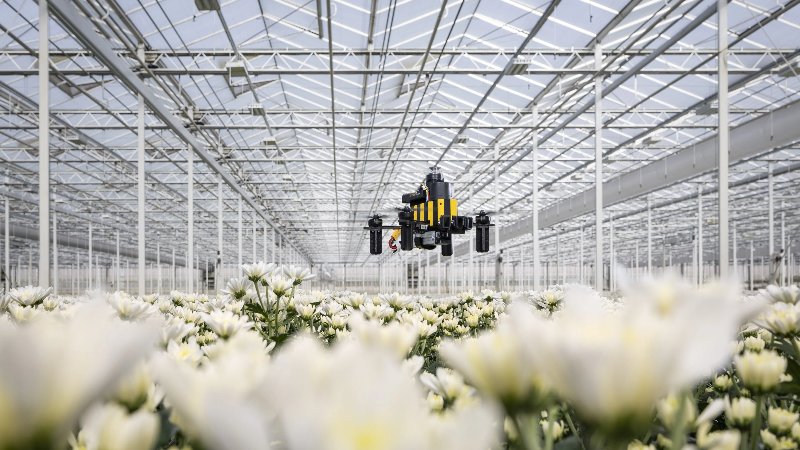
The researchers believe the system could be particularly useful for small drones with limited computing power and storage capacity, for example, in greenhouses or warehouses where GPS reception is poor. The system is still susceptible to wind, however. When the drone tilts, the camera images change, making visual recognition less accurate. TU Delft is conducting additional research to make the system more robust.