
Skip to content
Bits&Chips
×
×
About
Memberships
Advertising
Magazines
Videos
Contact

Log in

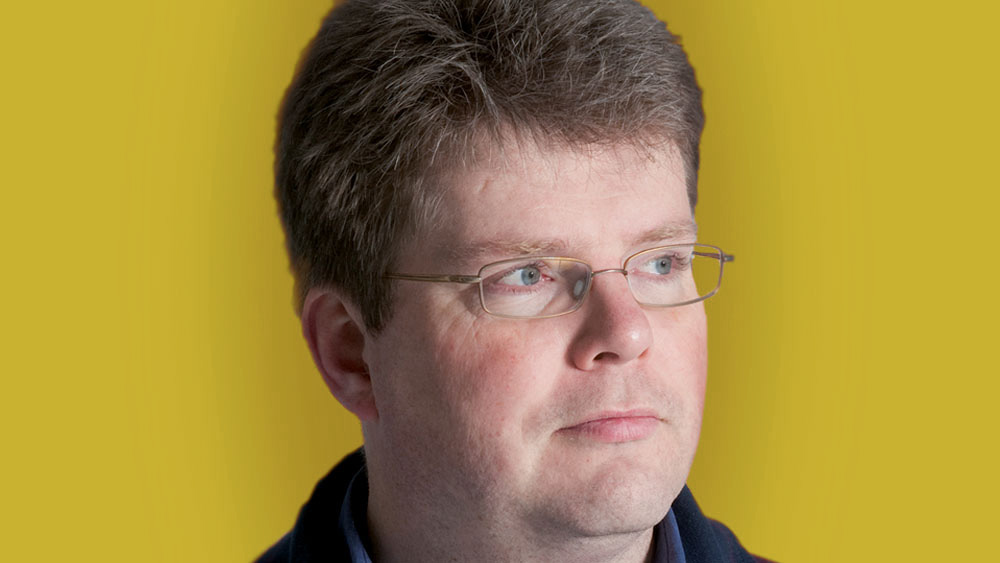
Anton Duisterwinkel is senior business developer at Innovationquarter.

Opinion

Quantum can become semicon 2.0 for the Netherlands

3 June 2026
Reading time: 3 minutes

Quantum technology now offers the chance to build a second pillar under the Dutch economy, this time centered around Delft and Leiden, argues Anton Duisterwinkel.

Quantum is booming in the Netherlands. Dozens of promising companies, many of which announce new and ever-bigger investment rounds – nicely following the familiar J-curve. More than 500 employees in total and counting. The best opportunity in the Netherlands for a new economy, according to Karien van Gennip, supervisory board member at ASML.

The province of South Holland, mainly Delft and Leiden, is the Dutch epicenter of quantum, but the region is spreading its wings in other technologies as well, including semicon (Nearfield, AIM Solutions), space and secure telecom (FSO) and defense (Robin Radar). According to Techleap, one-third of all Dutch deep-tech startups start in South Holland. All follow the typical Dutch OEM model of either using or being part of an extensive network of high-tech suppliers.

Most quantum companies specialize in modules and materials that enable quantum sensing, communication and computing systems. A recently started company aims to build a quantum computer using these modules and materials. This is a unique approach; all other quantum computer builders in the world are vertically integrated. Or used to be, as they’re slowly realizing that these weird specialists in Delft may actually produce better modules.

To enable their growth, these young companies need investments of 100 million euros or more, both young and experienced talent and a reliable, high-quality supply chain. Given the strategic importance of quantum technologies for security and economy, it’s imperative that these investments are made by European, if not Dutch, investors who have a deep understanding of the deep-tech market.

Young quantum talent is trained both in Leiden and Delft at such a level that it attracts international quantum companies to come to the Netherlands. At the same time, the young regional companies attract young quantum talent from abroad. Let’s hope that our current government will help welcome these talents to our country. Senior, experienced staff is much harder to attract, however.

At the same time, ASML is obviously and naturally entering the final slope of its innovation curve, signaled, for instance, by cost-cutting measures such as the reduction of 3,000 managers and the price pressure on the supply chain. New American legislation isn’t helping the matter. Be careful what you wish for when aiming for ‘control points’!

The supply chain of ASML has felt a dip in recent years and is looking for alternative clients. This may become urgent when (yes: when, not if) the Chinese enter ASML’s main market. They’re likely to take over at least the Chinese wafer stepper market.

These developments will hurt but not necessarily kill ASML. Non-Chinese chipmakers are probably hesitant to take up Chinese machines, fearing for IP and data safety. Moreover, ASML is diversifying, not only in AI, but also closer to its home market, in metrology for semicon. It boosted this new business, amongst others, by taking over Mapper Lithography in Delft, where it now steadily grows.

Developments at ASML play into the needs of young quantum companies

One and one is two, even in quantum. The urge for ASML to renew, its ability for large investments in deep tech and the redundancy of senior staff members all play into the needs of young quantum companies. Also, the quantum industry offers a new opportunity for the semicon supply chain.

Among the many managers who are (to be) laid off or have come to realize that their next career move will probably not be within ASML, many will try to remain active in deep tech. As more than half of the Dutch engineers received their education in South Holland, a significant number of them will be willing to go back to their roots. More than anyone else, they’ll have the experience that quantum companies need.

For the Dutch economy, it’s a big opportunity that this new industry is mainly located in Delft and Leiden and much less so in Eindhoven. The Eindhoven area will continue to grow, as far as that’s even possible in the current space, energy and talent squeeze. The supply chain in Brabant will follow suit. Next to this success, a second pillar under the Dutch deep-tech economy is already building up in Delft and Leiden. This should be supported. A second Beethoven program, investing in a new industry rather than an old one, seems more than appropriate.

Related content

The European AI stack: from political talking point to operational reality

GF absorbs Eindhoven engineering team from Synopsys

Top jobs
Data & AI Engineer
Axians
Zaltbommel
Events
Courses
Headlines
  • AI-driven boom pushes chip market past $1.5T

    3 June 2026
  • GF absorbs Eindhoven engineering team from Synopsys

    3 June 2026
  • Invisix raises €20M to commercialize soft X-ray metrology

    1 June 2026
  • Nikon aims to win back ArF litho business

    1 June 2026
  • Dutch consortium develops quantum sensor system to detect dark vessels

    1 June 2026
  • Leydenjar takes Peter Wennink Tech Award with silicon-anode battery breakthrough

    1 June 2026
  • Imec and EVG push hybrid bonding to 200 nanometers

    28 May 2026
  • France and US funnel billions in quantum race

    26 May 2026
  • Huawei claims path to 1.4nm-class chips without leading-edge litho

    26 May 2026
  • TU Delft teaches drones to navigate like honeybees

    20 May 2026
  • ASML CEO: first high-NA products expected within months

    20 May 2026
  • Imec uses high-NA EUV to pattern silicon qubit device

    19 May 2026
  • Prodrive to assemble Fortaegis security chips in Eindhoven

    18 May 2026
  • Dutch growth capital becomes scarcer

    18 May 2026
  • ASML joins Tata’s push for India’s first 300mm chip fab

    18 May 2026
  • InP-based ALF receiver amps up Westerbork telescope

    18 May 2026
  • Cocotec and Sioux partner in reliable systems development

    12 May 2026
  • Big Tech offers to bankroll SK Hynix chip expansion

    12 May 2026
  • Frostbyte bags €1.3M for scalable quantum control chips

    12 May 2026
  • Eyeo raises €40M to commercialize light-splitting image sensors

    11 May 2026
Bits&Chips logo

Bits&Chips strengthens the high tech ecosystem in the Netherlands and Belgium and makes it healthier by supplying independent knowledge and information.

Bits&Chips focuses on news and trends in embedded systems, electronics, mechatronics and semiconductors. Our coverage revolves around the influence of technology.

Advertising
Subscribe
Events
Contact
High-Tech Systems Magazine (Dutch)
(c) Techwatch bv. All rights reserved. Techwatch reserves the rights to all information on this website (texts, images, videos, sounds), unless otherwise stated.
  • About
  • Memberships
  • Advertising
  • Videos
  • Contact
  • Search
Privacy settings

Bits&Chips uses technologies such as functional and analytical cookies to improve the user experience of the website. By consenting to the use of these technologies, we may capture (personal) data, unique identifiers, device and browser data, IP addresses, location data and browsing behavior. Want to know more about how we use your data? Please read our privacy statement.


Give permission or set your own preferences

Functional Always active
Functional cookies are necessary for the website to function properly. It is therefore not possible to reject or disable them.
Voorkeuren
De technische opslag of toegang is noodzakelijk voor het legitieme doel voorkeuren op te slaan die niet door de abonnee of gebruiker zijn aangevraagd.
Statistics
Analytical cookies are used to store statistical data. This data is stored and analyzed anonymously to map the use of the website. De technische opslag of toegang die uitsluitend wordt gebruikt voor anonieme statistische doeleinden. Zonder dagvaarding, vrijwillige naleving door je Internet Service Provider, of aanvullende gegevens van een derde partij, kan informatie die alleen voor dit doel wordt opgeslagen of opgehaald gewoonlijk niet worden gebruikt om je te identificeren.
Marketing
Technical storage or access is necessary to create user profiles for sending advertising or to track the user on a site or across sites for similar marketing purposes.
  • Manage options
  • Manage services
  • Manage {vendor_count} vendors
  • Read more about these purposes
View preferences
  • {title}
  • {title}
  • {title}

Your cart (items: 0)

Products in cart

Product Details Total
Subtotal €0.00
Taxes and discounts calculated at checkout.
View my cart
Go to checkout

Your cart is currently empty!

Start shopping

Notifications